Robotic Gastrointestinal Surgery: Precision Care, Faster Recovery, Better Outcomes
 Dr. A Dinakar Reddy
Table of Contents
- The Evolution of GI Surgery: From Large Incisions to Robotic Precision
- The Evolution of Surgical Care: From Tradition to Robotics
- Why Robotic Surgery is Changing GI Care
- Recovery Has Been Redefined
- What Conditions Can Be Treated Robotically?
- The Numbers Behind the Technology
- The Future of Gastrointestinal Surgery is Here
The Evolution of GI Surgery: From Large Incisions to Robotic Precision
Surgery has come a long way. Traditional open gastrointestinal (GI) surgery used to require cuts and long hospital stays. Now, robotic-assisted GI surgery is one of the advanced surgical technologies. It offers precision, faster recovery and better patient outcomes.
According to the Society of American Gastrointestinal and Endoscopic Surgeons (SAGES) and many international surgical studies, invasive and robotic techniques mean less pain after surgery, fewer problems, shorter hospital stays and a quicker return to normal activities compared to traditional open surgery.
The Evolution of Surgical Care: From Tradition to Robotics
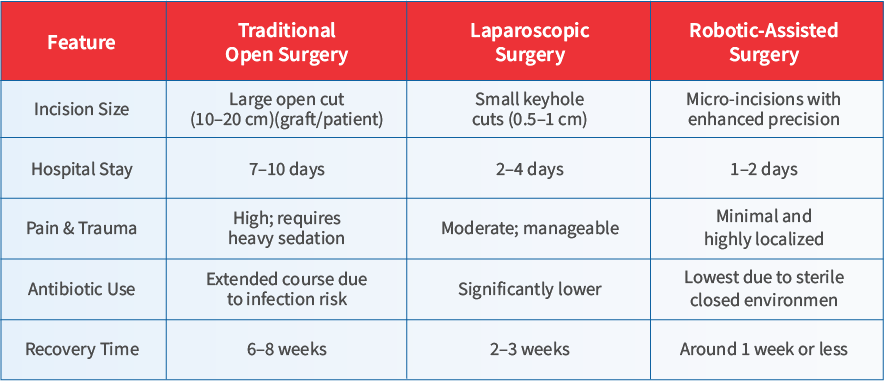
The journey of gastrointestinal (GI) surgery has evolved from maximal intervention to minimal intervention. Understanding this transformation explains why patients from across the world increasingly choose Hyderabad for advanced surgical care.
Why Robotic Surgery is Changing GI Care
Robotic surgery doesn't replace the surgeon. It helps the surgeon do their job better.
With a high-definition 3D magnified view and robotic instruments, surgeons can operate with accuracy. This is especially true in complex areas like the pelvis, oesophagus, pancreas and rectum.
Clinical Benefits
- Incisions with minimal scarring
- Up to 50–70% less blood loss in many complex GI procedures compared to open surgery
- Lower pain after surgery. Fewer opioid pain medications needed
- Lower Risk of wound infections because of smaller incisions
- Shorter hospital stay – many patients go home within 24–48 hours after selected procedures
- Faster. Earlier return to work and daily activities
- Greater surgical precision while preserving surrounding tissues
Recovery Has Been Redefined
Modern robotic surgery has changed recovery for patients of all ages.
20–30 Years | Back to Life Faster
Procedures like appendicectomy and hernia repair often let patients return to routine activities within 3–5 days. The results look great too.
30–50 Years | Minimal Downtime
Patients having surgery for gallstones, reflux disease, colorectal disorders or inflammatory bowel conditions often experience:
- Earlier eating and drinking
- Lesser pain after surgery
- Fewer antibiotics needed
- Return to work within 7–10 days depending on the procedure
50 Years and Above | Greater Safety for Complex Surgery
Patients with diabetes, heart disease, obesity or multiple medical conditions often benefit from robotic surgery. It causes:
- Less stress on the body
- Less blood loss
- Fewer wound complications
- Earlier movement
- Faster recovery after cancer and reconstructive GI surgeries
What Conditions Can Be Treated Robotically?
Robotic GI surgery is being used for:
- Gallbladder surgery (Cholecystectomy)
- Hernia repairs
- Colorectal cancer surgery
- Cancer surgery
- Stomach cancer surgery
- Hiatal hernia and reflux surgery
- Liver surgery (some cases)
- Surgery (some cases)
- Complex GI reconstructions
The Numbers Behind the Technology
Research shows advantages of robotic-assisted GI surgery:
- 30–50% reduction in postoperative complications for selected colorectal procedures compared to open surgery
- Hospital stays reduced by up to 50% after minimally invasive colorectal surgery
- Earlier return of bowel function
- Low Rates of surgical-site infections
- High patient satisfaction
The Future of Gastrointestinal Surgery is Here
Robotic-assisted GI surgery is changing the way complex digestive disorders are treated. With precision, minimal pain, shorter hospital stays and quicker recovery, it represents an advancement in modern surgical care.
Robotic technology helps surgeons perform with confidence. It also helps patients return to their lives sooner. Whether it's a procedure or complex GI cancer surgery, robotic surgery makes a difference.