Colorectal Cancer Screening and Surgical Advances: What Has Changed and Why It Matters
 Dr. Ramakrishna Prasad Chilukuri
Table of Contents
- Why Is Colorectal Cancer Often Detected Late in India?
- What Does Screening Actually Look for?
- If Stool Tests Exist, Why Is Colonoscopy Still Needed?
- When Should Someone Start Screening?
- How Has Colorectal Cancer Surgery Improved in Recent Years?
- What Kind of Colorectal Care Does STAR Hospitals Offer?
- A Final Word
Most people do not think about colorectal cancer until symptoms appear. By then, the disease is often already advanced. This is concerning because colorectal cancer is one of the few cancers where early detection can genuinely change the outcome. With better screening tools and safer surgical techniques now available, the conversation around this cancer has shifted, even in India.
At centres like STAR Hospitals in Hyderabad, screening and treatment are no longer viewed as isolated steps. They are part of a continuous process that starts with risk assessment and, when required, moves smoothly toward targeted surgical care.
Why Is Colorectal Cancer Often Detected Late in India?
Colorectal cancer affects the colon and rectum and usually develops slowly. In many cases, it begins as a small polyp that causes no pain, bleeding, or visible symptoms. Because of this silent progression, people often delay evaluation, assuming mild bowel changes are dietary or temporary.
Awareness around routine screening is still in the evolving stage in countries like India. This is true especially in the case of adults in their forties and early fifties who do not usually suspect health problems. However, doctors are now seeing a steady rise in cases detected at a younger age, which makes timely screening more relevant than ever.
What Does Screening Actually Look for?
Screening is not just about finding cancer. In fact, its greatest value lies in detecting pre-cancerous changes before they become dangerous. The goal is early identification — and, when possible, early removal.
Are There Screening Tests That Do Not Require a Procedure?
Yes, and this has made screening far more acceptable for many people.
Stool-based tests are designed to detect subtle warning signs, such as hidden blood or genetic material released by abnormal cells. These tests are simple, non-invasive, and can usually be done at home.
-
Faecal Immunochemical Test (FIT):
This test checks for traces of blood in the stool that are not visible. It is easy to perform, does not require dietary restrictions, and is commonly repeated every year. -
Stool DNA Test:
This test looks for specific DNA changes associated with colorectal cancer and advanced polyps. It can detect cancers that may not bleed, though it is typically used selectively and followed by further evaluation if positive.
These tests are useful starting points. Remember, it is not necessary that if you have a positive result, it confirms cancer. It calls for a closer look, which should be done immediately.
If Stool Tests Exist, Why Is Colonoscopy Still Needed?
Colonoscopy remains the most comprehensive screening tool available today. It allows doctors to directly examine the entire colon and rectum and remove suspicious polyps during the same procedure.
In clinical practice, it is considered particularly useful for people with abnormal stool test results, persistent symptoms, or a family history of colorectal cancer to confirm the diagnosis. While the idea of the test may cause anxiety, modern techniques have made it safer and more comfortable than many expect.
When Should Someone Start Screening?
There is no single answer that fits everyone.
If you are an average-risk individual, screening is often advised from around 40 to 45 years of age. Main risk factors are a history of colorectal cancer, long-standing bowel symptoms, or certain lifestyle factors. If you are someone with these conditions, you may require earlier or more frequent evaluation.
The type of test and its frequency are best decided after a discussion with a doctor who understands the patient’s overall health profile.
How Has Colorectal Cancer Surgery Improved in Recent Years?
Surgery is a key part of treatment when colorectal cancer is detected. What has changed significantly is how that surgery is performed.
Minimally invasive techniques, including laparoscopic and robotic-assisted procedures, use smaller incisions and specialised instruments to remove the affected section of the bowel. For many patients, this means:
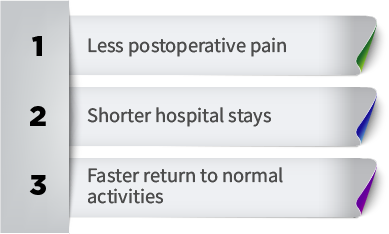
These approaches are now widely used when the cancer is detected early and carefully evaluated before surgery.
What Kind of Colorectal Care Does STAR Hospitals Offer?
At STAR Hospitals, colorectal care is managed by teams that include surgical gastroenterologists, oncologists, radiologists, and anaesthetists working together. Decisions are not made in isolation.
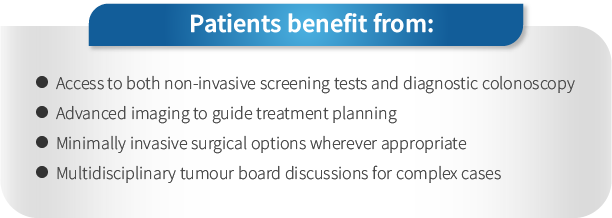
This coordinated approach helps ensure that treatment is timely, measured, and aligned with established clinical standards.
A Final Word
Colorectal cancer does not have to be a late diagnosis. With the availability of simple screening tests, accurate diagnostic tools, and safer surgical techniques, outcomes today are far better than they were a decade ago.
For adults over 40 and especially those with risk factors, starting a conversation about screening is often the most important step. At centres like STAR Hospitals, which are equipped to handle the entire spectrum of care from early detection to advanced surgery, that conversation can lead to meaningful, life-saving outcomes.
To know more or book an appointment, call 1800-102-7827.