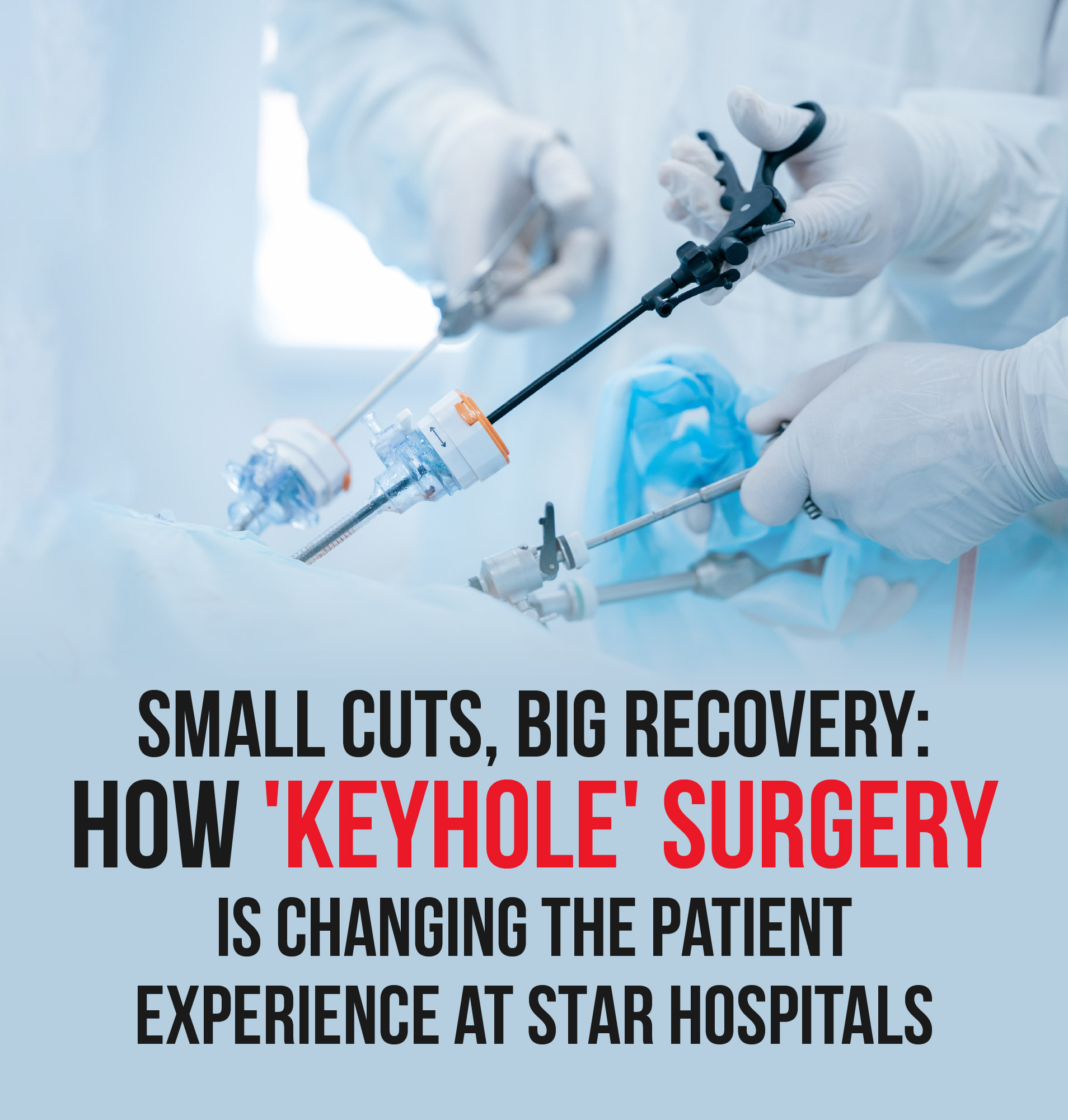
Small Cuts, Big Recovery: How 'Keyhole' Surgery is Changing the Patient Experience at STAR Hospitals
 Dr. Boddula Prashanth
Table of Contents
- What Is Laparoscopic Surgery?
- Why Has Laparoscopic Surgery Become So Popular?
- Laparoscopic Gallbladder Surgery: A Major Step Forward
- What Happens During Laparoscopic Gallbladder Surgery?
- Can You Live Normally Without a Gallbladder?
- Laparoscopic Appendix Surgery: Faster Treatment, Better Recovery
- New Innovations Making Surgery Even Safer
- Who Can Benefit from Minimally Invasive Surgery?
- Recovery After Laparoscopic Surgery
- The Future of Surgical Care
Surgeries involving the gallbladder and appendix, for a long time, meant large cuts, longer hospital stays, and weeks of recovery. But this is not the case. Thanks to advances in laparoscopic surgery, many patients can now return home within a day or two, with smaller scars, less pain, and a much faster recovery.
At Star Hospitals, laparoscopic, commonly known as "keyhole surgery", is widely used for conditions such as gallstones, appendicitis, hernias, and several gastrointestinal disorders, giving high priority to safer procedures, quicker healing, and less disruption to everyday life.
What Is Laparoscopic Surgery?
Laparoscopic surgery is a minimally invasive surgical technique performed through a few very small incisions instead of one large cut.
The procedure includes a thin tube with a tiny camera, called a laparoscope, which is inserted into the abdomen. This camera sends clear images to a monitor, which helps surgeons perform surgery with precision.
Why Has Laparoscopic Surgery Become So Popular?
Traditional open surgery still has its place in some complex cases. Still, laparoscopic surgery has become the preferred option for many gallbladder and appendix procedures, due to how it modernises the entire procedure:
-
Smaller Incisions: Instead of a long surgical cut, only a few small openings are needed, which causes minimal scarring, less tissue damage, and better cosmetic results
-
Reduced Pain After Surgery: Because in this procedure the muscles and tissues are disturbed less, patients generally experience lower post-operative pain compared to open surgery.
-
Faster Recovery: Many patients report that they can walk on the same day, leave the hospital in 1-2 days, resume light activities, and return to normal routines very soon.
-
Lower Risk of Infection: Because there are very small incisions involved, it usually reduces exposure and helps lower the risk of wound-related complications.
Laparoscopic Gallbladder Surgery: A Major Step Forward
Gallstones are one of the most common digestive problems today. Some people may never notice them, while others start noticing simple symptoms like:
● Sudden abdominal pain and bloating
● Indigestion after meals
● Nausea and vomiting
When symptoms become frequent or severe, surgery may be recommended.
What Happens During Laparoscopic Gallbladder Surgery?
The standard treatment for problematic gallstones is laparoscopic cholecystectomy, where the gallbladder is removed through small incisions. It is now considered the gold standard for gallbladder treatment. The entire process is designed to minimize trauma to the body while ensuring safe removal of the diseased organ.
Can You Live Normally Without a Gallbladder?
Yes. The liver continues to produce bile even after the gallbladder is removed. Most patients return to completely normal lives after recovery, though some may need temporary dietary adjustments initially.
Laparoscopic Appendix Surgery: Faster Treatment, Better Recovery
Appendicitis is a medical emergency that occurs when the appendix becomes inflamed. If left untreated, it can burst, leading to a serious infection.
Common symptoms include:
● Pain in the lower right abdomen
● Fever
● Nausea
● Loss of appetite
● Vomiting
How Is It Treated?
The standard treatment is appendectomy, meaning removal of the appendix. Today, laparoscopic appendectomy is widely preferred as in many cases, patients can recover significantly faster than with traditional open surgery.
New Innovations Making Surgery Even Safer
Modern laparoscopic surgery continues to evolve rapidly. Hospitals and surgical teams now use advanced equipment and improved imaging systems that allow greater precision during procedures.
Some of the newer developments include:
-
High-definition imaging that provides surgeons with clearer visualization of organs and tissues.
-
Single-incision surgery that further reduces visible scarring.
-
Robotic-assisted surgery that improves precision and control during complex procedures.
Who Can Benefit from Minimally Invasive Surgery?
Laparoscopic surgery is suitable for many patients, but the final decision depends on certain factors such as:
● Severity of the condition
● Previous surgeries
● Overall health
● Presence of infection or complications
A qualified surgeon evaluates each case carefully before recommending the most suitable approach.
Recovery After Laparoscopic Surgery
Recovery is generally smoother than with traditional surgery. Still, proper care matters. Patients are usually advised to:
● Walk gently soon after surgery
● Stay hydrated
● Eat light meals initially
● Avoid heavy lifting temporarily
● Attend follow-up appointments
Most people notice steady improvement within a few days.
The Future of Surgical Care
Laparoscopic surgery has changed the way gallbladder and appendix conditions are treated. Procedures that once required long hospital stays and extended recovery periods are now safer, quicker, and far less physically demanding for patients. As technology continues to improve, minimally invasive surgery is expected to become even more precise, efficient, and patient-friendly in the years ahead.
At Star Hospitals, minimally invasive surgical care focuses on patient comfort, precision, and faster healing through advanced laparoscopic techniques. To know more or book an appointment, visit STAR Hospitals today.