Why Does Bad Breath Happen? Common Causes You Shouldn't Ignore
 Dr. P. Venugopal Reddy
Table of Contents
- What Causes Bad Breath?
- What are the common signs of bad breath?
- Simple ways to prevent bad breath
- Halitosis treatment depends on the cause.
Most of us have wondered at some point whether our breath smells unpleasant, or have found ourselves stepping back during a conversation because of someone else's bad breath. Halitosis, commonly known as bad breath, is a surprisingly common problem that can affect confidence, social interactions, and overall quality of life. While it is often dismissed as a minor inconvenience, persistent bad breath is not always just a cosmetic concern. Contrary to the old belief that it mainly originates from stomach problems, most cases actually arise from conditions within the mouth.
What Causes Bad Breath?
Occasional bad breath after eating garlic, onions, or other strongly flavored foods is normal and usually temporary. However, chronic halitosis that does not improve with routine oral care may indicate an underlying issue.
- Poor Oral Hygiene: Irregular brushing and flossing allow plaque and germs to build up. When food particles remain trapped between teeth or on the tongue, bacteria begin to break them down, releasing unpleasant odours.
- Tongue Bacteria: The tongue, especially the back or deeper tongue, can collect bacteria, dead cells and food debris. This is one of the most overlooked causes of bad breath.
- Gum Disease: Persistent bad breath is often an early warning sign of gum disease. Swollen or bleeding gums caused by infections can produce a strong odour.
- Dry Mouth: Saliva naturally cleans the mouth and removes odour-causing particles. When the mouth becomes dry due to dehydration, medications, mouth breathing, or reduced saliva production, it can cause bad breath.
- Certain Foods and Drinks: Foods like garlic and onions, spicy dishes, coffee, and alcohol can leave lingering odours. Some of these foods release compounds into the bloodstream that are later exhaled through the lungs and out of the mouth as stinky breath.
- Smoking and Tobacco Use: Tobacco products dry the mouth, stain teeth, and encourage gum disease, all of which contribute to unpleasant breath.
- Tooth Decay or Dental Problems: Cavities, infected teeth, poorly cleaned dentures, or trapped food around dental work can create foul smells.
- Digestive Issues: Acid reflux and certain stomach disorders can cause unpleasant-smelling breath due to stomach acid moving upward into the throat.
- Nose, Throat or Sinus Infections: Mucus buildup, sinus, tonsil or throat infections can lead to persistent bad breath.
- Medical Conditions: Certain health problems, such as diabetes, liver disease, kidney disease, or respiratory infections, may sometimes change the smell of a person’s breath
Bad breath is not always easy to detect by yourself. A good way to check is to blow your breath onto the back of your mouth and sniff it immediately. Also, be open to your relatives’ and friends’ comments instead of finding offence in them.
What are the common signs of bad breath?
- A persistent unpleasant smell from the mouth
- A bad, bitter or sour taste in the mouth
- Dry mouth or a sticky feeling in the mouth
- White coating on the tongue
- Thick saliva or a constant need to clear the throat
- Bad breath that is strongest in the morning
- People stepping back while talking
- People offering gum/mints while conversing with you
- The feeling of staleness even after brushing teeth
- Bleeding gums or swollen gums along with mouth odour
- Persistent sour or foul smell while breathing out
In some cases, bad breath may also be accompanied by:
- Tooth decay or tooth pain
- Tonsil infections, Sinus, or throat infections
- Acid reflux or stomach discomfort
Fresh breath is not only about confidence and social comfort — it is also about a person's overall health. Attending to persistent bad breath issues may help identify problems early and improve both oral and general well-being. If bad breath continues despite good oral hygiene, it may be a good idea to consult a dentist or doctor to identify the underlying cause.
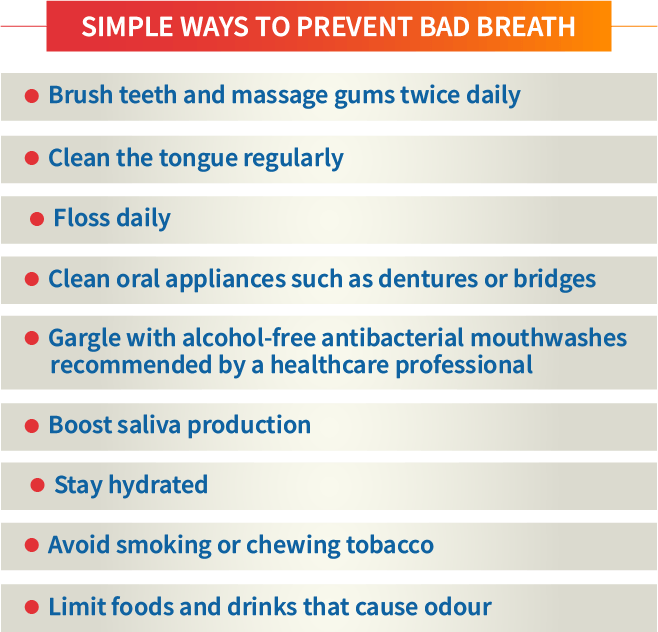
Simple ways to prevent bad breath
 What treatments are available for bad breath?
Halitosis treatment depends on the cause.
- If bad breath is related to plaque build-up, a dental cleaning and improved oral hygiene at home will likely help. It is especially important to scrape your tongue, as bacteria and food debris can hide there.
- A dentist may recommend brands of special mouth rinses. Some mouthwashes only mask odours. Others fight the bacteria causing bad breath. The bacteria-killing kind should manage to fix the real issue.
- If Halitosis is a symptom of another health condition somewhere else in the body, a primary care provider can help with proper diagnosis and treatment.
A message from STAR Hospitals
Persistent bad breath is often more than a simple oral hygiene concern. In some cases, it may be linked to underlying dental, digestive, ENT, metabolic, or systemic health conditions that require medical attention. At STAR Hospitals, our multidisciplinary team works together to identify the root cause of persistent halitosis through comprehensive evaluation and advanced diagnostic services. With expertise in gastroenterology, ENT, internal medicine, and preventive healthcare, we provide personalized care for conditions such as acid reflux, sinus disorders, oral infections, and other health issues that may contribute to bad breath, helping patients achieve better oral health and overall well-being.
FAQs
Q. Can fasting or dieting cause bad breath?
A. Yes, fasting and low-carb diets are common reasons for temporary bad breath. When your body burns fat instead of carbohydrates, it produces ketones that create a fruity or acetone smell on your breath.
Q. Can stress lead to bad breath?
A. Stress causes bad breath by reducing saliva production and causing dry mouth. Stress also changes breathing patterns and may lead to mouth breathing, both reasons for bad breath in the mouth.
Q. Is mouthwash enough to cure bad breath?
A. No. Mouthwash temporarily masks odor but doesn’t address what causes bad breath at the source. You need proper brushing, flossing, and tongue cleaning to remove the bacteria creating the smell.
Q. Can stomach issues cause bad breath?
A. Yes, conditions like acid reflux, GERD, and H. pylori infections are reasons for bad breath. Stomach acid backing up into your esophagus brings odor-causing compounds into your mouth.
Q. Why does bad breath return even after brushing?
A. If the reason for bad breath involves gum disease, tooth decay, sinus infections, or digestive issues, brushing alone won’t fix it. You need to treat the underlying condition causing the persistent odour