Kidney Stones: Causes, Symptoms, Diagnosis & Treatment
 Dr. Vijay Kumar Sarma Madduri
Table of Contents
- Risk Factors for Kidney Stones
- Types of Kidney Stones
- What are the Symptoms of Kidney Stones?
- How Are Kidney Stones Diagnosed?
- Kidney Stone Treatment
- Kidney Stone Removal Cost
- How Can Kidney Stones Be Prevented?
Kidneys are the filters of our bodies. Urine contains minerals, acids and other substances, such as calcium, sodium, oxalate and uric acid. When there are too many particles of these substances in the urine and too little liquid, these particles start sticking together, forming crystals or stones.
Kidney stones can form over months or years. They can vary in size, from small crystals to larger stones. While smaller stones often pass through urine, they can also be painful. Larger ones may block urinary flow, causing intense kidney stone pain, infection, or even kidney damage if left untreated.
Risk Factors for Kidney Stones
Certain factors can increase the likelihood of developing kidney stones, including:
- Not drinking enough water
- Excessive salt intake
- Obesity
- Family history of kidney stones
- Recurrent urinary tract infections
- Diets high in animal protein
- Certain medications and metabolic disorders
- Previous history of kidney stones
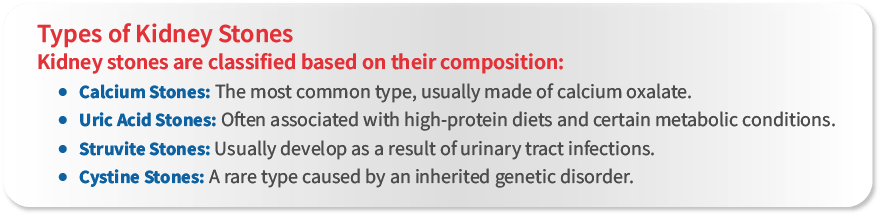
Types of Kidney Stones
What are the Symptoms of Kidney Stones?
The most common symptom of kidney stones is pain in your lower back, belly, or side. It might feel like it extends from the groin to the side. It can be a dull ache or sharp and severe pain. Sometimes it can get worse in waves. This symptom is called colicky pain.
Other kidney stone symptoms include:
- Nausea and vomiting
- Blood in the urine
- Pain when urinating
- Inability to urinate
- Frequent urge to urinate
- Cloudy or foul-smelling urine
- Fever and chills if an infection is present
When Should You See a Doctor?
You should seek immediate medical attention if you experience:
- Severe pain that does not improve
- Blood in the urine
- Fever and chills
- Persistent nausea or vomiting
- Difficulty passing urine
- Signs of urinary tract infection
How Are Kidney Stones Diagnosed?
Healthcare providers use imaging, blood, and urine tests to diagnose kidney stones.
Urine Test
A healthcare provider may recommend a urine test to check for blood, stone-forming crystals, and signs of infection.
Imaging Tests
X-rays, CT scans (Computed Tomography scans), and ultrasounds help the healthcare provider determine the size, shape, location, and number of stones.
Blood Tests
Blood tests help assess kidney function, detect infections, and identify high calcium levels or other conditions that may contribute to stone formation.
Kidney Stone Treatment
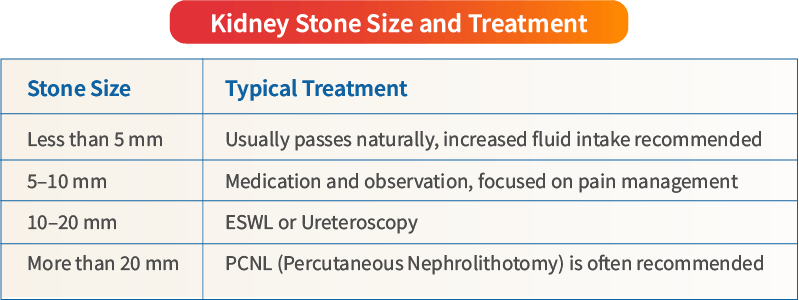
The treatment for kidney stones depends on the stone's size, type, and location, as well as the patient's symptoms.
Kidney Stone Size and Treatment
Kidney Stone Procedures
The type of procedure depends on many factors, including the size and location of the stone.
-
Ureteroscopy:
A scope is inserted through the urethra and bladder into the ureter. Instrument pass breaks and remove the stone, which then passes through the urinary tract easily.
-
Percutaneous Nephrolithotomy (PCNL):
Percutaneous nephrolithotomy is recommended when a kidney stone cannot be treated with other procedures. During PCNL, the provider inserts a tube directly into the kidney through a tiny incision in the back. An ultrasound probe breaks apart and removes the stones.
-
Laparoscopic Surgery:
During laparoscopic surgery, the healthcare provider makes a small incision to remove the stone. In rare cases, open surgery with a larger incision may be required.
-
ESWL (Extracorporeal Shock Wave Lithotripsy)
ESWL kidney stone treatment is a non-invasive procedure that uses shockwaves generated outside the body to break kidney stones into smaller fragments, which can then pass more easily through the urinary tract. It is performed as a day-care treatment and typically takes 30-60 minutes.
Kidney Stone Removal Cost
A consultation with a urologist can help determine the most suitable treatment plan and the associated costs.
How Can Kidney Stones Be Prevented?
While not all kidney stones can be prevented, the following measures can help reduce the risk:
- Drink 2.5–3 litres of water daily.
- Reduce salt intake.
- Maintain a healthy body weight.
- Follow a balanced diet.
- Limit excessive consumption of oxalate-rich foods when advised.
- Manage underlying medical conditions.
- Attend regular follow-ups if you have a history of kidney stones.
Frequently Asked Questions
Can kidney stones pass naturally?
Yes. Small kidney stones often pass naturally with adequate hydration and medical management.
Can kidney stones recur?
Yes. Individuals who have had kidney stones are at a higher risk of developing them again. Lifestyle modifications and preventive measures can reduce recurrence.
Which doctor should I consult for kidney stones?
A urologist specializes in diagnosing and treating kidney stones and other urinary tract conditions.
Expert Kidney Stone Treatment at Star Hospitals, Hyderabad
A centre of excellence across multiple specialties and a leading healthcare institution, STAR Hospitals houses one of the best nephrology departments in Hyderabad, known for advanced medical care, experienced specialists, and modern treatment facilities. If you or your loved one is suffering from kidney stone-related problems, get the best care at STAR Hospitals. For kidney stone removal cost, advanced diagnostics, and ESWL for kidney stone treatment, connect with us today.