Table of Contents
- Understanding Kidney Disease
- Dialysis: A Lifeline When Kidneys Fail
- Pros of Dialysis
- Cons of Dialysis
- Kidney Transplant: A Second Chance at Life
- Types of Kidney Donation
- Pros of Kidney Transplant
- Cons of Kidney Transplant
- Comparison of Dialysis vs. Kidney Transplant
- Choosing the Right Option: Dialysis or Transplant?
- Why Star Hospitals Hyderabad is a Trusted Name in Kidney Care
- What Sets Star Hospitals Apart?
- Take Charge of Your Kidney Health—Contact Star Hospitals Today
Kidney disease is a silent yet significant health issue that impacts millions worldwide. It can either progress gradually or appear abruptly. Kidney dysfunction can severely affect an individual's quality of life. For those diagnosed with end-stage kidney disease, there are two main treatment alternatives—dialysis or kidney transplantation. Each option presents its unique advantages, challenges, and transformative decisions.
Before exploring the benefits and drawbacks of these critical procedures, it is essential to comprehend the development of kidney disease, its associated risks, and the urgency of treatment.
Understanding Kidney Disease: The Hidden Danger
The kidneys are essential for maintaining bodily equilibrium; they filter out waste, regulate electrolyte levels, control blood pressure, and promote the production of red blood cells. When kidney function declines, the body can accumulate harmful toxins and excess fluids, which may lead to severe health complications.
Common contributors to kidney disease include:
1. Diabetes: Elevated blood sugar levels can gradually damage the blood vessels in the kidneys, making it the primary cause of chronic kidney disease (CKD).
2. High Blood Pressure: Persistent high blood pressure can damage the delicate filtering units within the kidneys.
3. Glomerulonephritis: Inflammation of the kidney's filtering units may result in either acute or chronic damage.
4. Extended use of specific medications: Long-term consumption of pain relievers and certain antibiotics can adversely affect kidney health.
The risks and complications associated with kidney disease include:
• Fluid retention, which may cause swelling in the legs, ankles, or lungs.
• Electrolyte imbalances, especially concerning potassium, which can disrupt heart rhythms.
• Weakened bones and increased fracture risk due to imbalances in calcium and phosphorus.
• Anaemia, leading to feelings of fatigue and weakness.
• Increased risk of heart disease and stroke due to elevated blood pressure and toxin accumulation.
When kidney function declines to 85-90%, an individual reaches end-stage renal disease and requires either dialysis or a kidney transplant for survival.
Dialysis: A Lifeline When Kidneys Fail
Dialysis is a medical treatment that takes over the filtering function of the kidneys. It eliminates waste, toxins, and surplus fluids from the body, serving as the primary treatment option when kidney function ceases.
There are two main types of dialysis:
Haemodialysis, where blood is filtered through an external dialysis machine, is typically performed three times weekly at a medical facility for sessions lasting between three and five hours.
Peritoneal dialysis, which involves inserting a catheter into the abdomen to cleanse the blood using a specialised fluid through the abdominal lining. It allows for home treatment and greater flexibility.
Pros of Dialysis
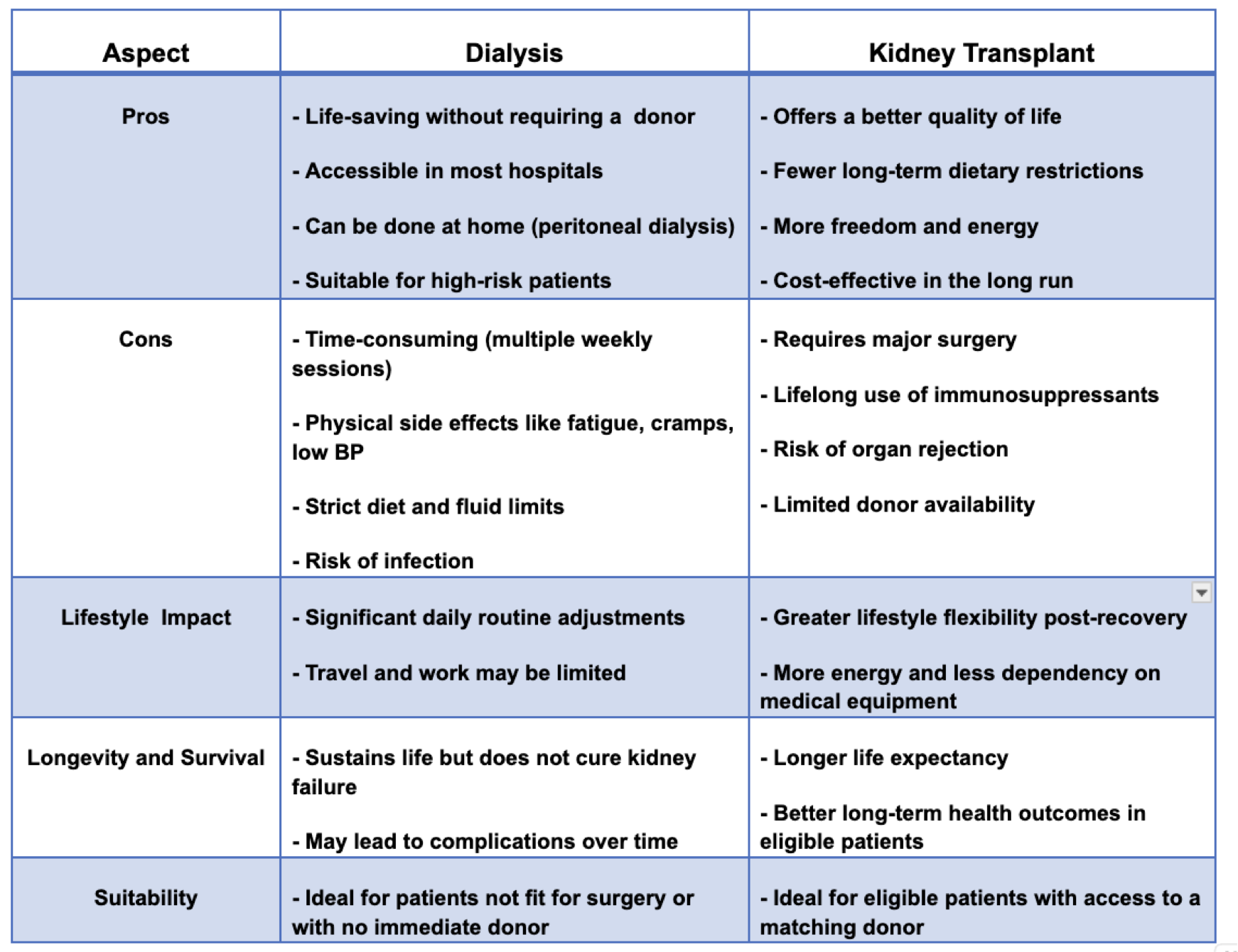
- Life-saving: Helps patients stay alive while waiting for a kidney transplant or if a transplant isn't an option.
- Accessibility: Available in most hospitals and can be administered at home in some cases.
- No need for a donor: Unlike a transplant, dialysis doesn't require organ matching or surgery.
Cons of Dialysis
- Time-consuming: Frequent sessions limit mobility and can interfere with work and social life.
- Physical side effects: Fatigue, muscle cramps, nausea, and low blood pressure are common.
- Lifestyle restrictions: Patients must follow a strict diet, monitor fluid intake, and manage medication schedules.
- Risk of infection: Especially with peritoneal dialysis or if vascular access sites are not properly maintained.
Despite these challenges, dialysis remains a critical treatment, especially for elderly patients or those with other health issues that complicate transplantation.
Kidney Transplant: A Second Chance at Life
A kidney transplant is a surgical procedure that involves the implantation of a healthy kidney from either a living or deceased donor into the recipient's body. This transplanted kidney takes over the role of the malfunctioning kidney, significantly enhancing the recipient's quality of life compared to prolonged dialysis treatment.
Types of Kidney Donation
- Living Donor Transplant: A family member, friend, or even a non-related donor volunteers a kidney. This usually yields better outcomes and quicker recovery.
- Deceased Donor Transplant: The kidney comes from someone who has recently passed away and previously consented to donate their organs.
Pros of Kidney Transplant
- Improved quality of life: Patients often regain energy, appetite, and the freedom to travel or return to work.
- Long-term survival: Transplants generally offer longer life expectancy than dialysis.
- Fewer restrictions: Most dietary and fluid restrictions are lifted post-transplant.
- Cost-effective in the long run: While initial costs are high, long-term care is less expensive than ongoing dialysis.
Cons of Kidney Transplant
- Surgery risks: Like any major surgery, risks include infection, bleeding, or blood clots.
- Immunosuppressants: Lifelong medication is required to prevent organ rejection, which weakens the immune system and increases infection risk.
- Limited organ availability: Finding a matching donor can take years, especially in certain blood types or age groups.
- Risk of rejection: There is always a chance the body will reject the new kidney, requiring close monitoring and possible return to dialysis.
Choosing the Right Option: Dialysis or Transplant?
There’s no one-size-fits-all answer. Some patients may begin with dialysis and transition to a transplant when a donor becomes available. Others may opt for a transplant right away if they are eligible. Key factors to consider include:
- Overall health and comorbidities
- Age and lifestyle
- Availability of a donor
- Personal preferences
- Support system for recovery and follow-up care
Speaking with a nephrologist and transplant specialist is crucial to making the best decision based on individual circumstances.
Why Star Hospitals Hyderabad is a Trusted Name in Kidney Care
Star Hospitals in Hyderabad stand as a paragon of excellence in the treatment of kidney diseases and transplant services. Renowned for its clinical proficiency, empathetic care, and state-of-the-art technology, Star Hospitals has significantly improved the lives of numerous patients facing kidney challenges.
What Sets Star Hospitals Apart?
- Expert Nephrology Team: The hospital boasts highly experienced nephrologists, dialysis specialists, and transplant surgeons who collaborate to deliver customised treatment plans.
- Advanced Dialysis Units: Equipped with state-of-the-art haemodialysis machines, offering maximum comfort and safety.
- Successful Transplant Programme: From matching and pre-surgical evaluations to post-transplant care, patients receive end-to-end support.
- Patient-Centric Philosophy: Star Hospitals emphasises patient education, emotional support, and long-term well-being.
- 24/7 Critical Care: Dedicated ICUs and emergency services ensure timely intervention when needed most.
Whether you're seeking maintenance dialysis or exploring transplant possibilities, Star Hospitals delivers world-class kidney care with a human touch.
Take Charge of Your Kidney Health—Contact Star Hospitals Today!
If you or a loved one is dealing with kidney disease, now is the time to take action. Do not let uncertainty hold you back. Reach out to Star Hospitals, Hyderabad, and consult with leading experts who can guide you toward the right treatment path.