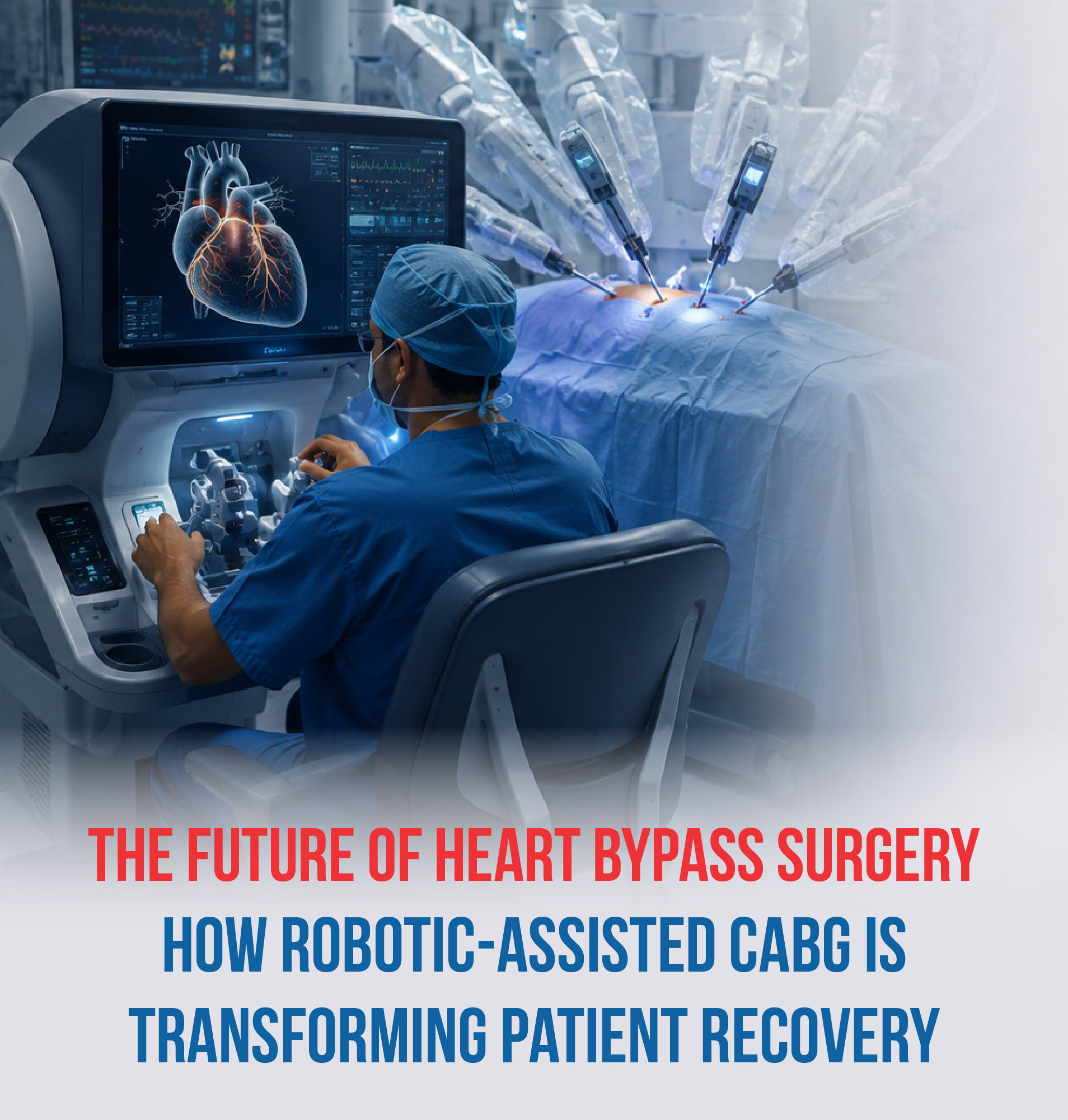
The Future of Heart Bypass Surgery: How Robotic-Assisted CABG is Transforming Patient Recovery
 Dr. Gopichand Mannam
Table of Contents
- Understanding Coronary Artery Disease and CABG
- The Evolution of Heart Bypass Surgery
- What is Robotic-Assisted MICS CABG?
- How the Procedure is Performed
- Why Robotic-Assisted CABG is Transforming Cardiac Care
Coronary artery disease is the leading cause of death, causing nearly 18 million deaths every year, according to the World Health Organization (WHO). One common cause of this disease is blockages in the arteries that supply oxygen-rich blood to the heart. When these blockages get severe, patients may experience chest pain, shortness of breath, reduced ability to exercise or life-threatening heart attacks.
For a time, Coronary Artery Bypass Grafting has been the best treatment for significant coronary artery blockages. Traditional bypass surgery has saved lives, but it usually requires a sternotomy, a surgical procedure where the breastbone is divided to access the heart.
Today, advances in surgery are changing this. Robotic-Assisted Minimally Invasive Coronary Artery Bypass Grafting is emerging as an alternative that combines the effectiveness of bypass surgery with smaller incisions, less pain and faster recovery. At STAR Hospitals, Hyderabad, robotic-assisted surgery is helping eligible patients benefit from advanced technology while maintaining excellent surgical outcomes.
Understanding Coronary Artery Disease and CABG
The coronary arteries supply blood to the heart muscle. When cholesterol-rich plaque builds up inside these arteries, blood flow becomes restricted.
The Left Anterior Descending artery is often called the "widow-maker" artery because blockages here can significantly impact heart function and survival.
For patients with blockages in this artery, bypass surgery is often recommended because it:
- Restores blood flow to the heart
- Relieves chest pain symptoms
- Improves quality of life
- Reduces cardiac events
- Offers excellent long-term outcomes
Studies have shown that the Internal Mammary Artery to LAD bypass graft remains over 90–95% effective even after 10 years, making it one of the most durable treatments in cardiovascular surgery.
The Evolution of Heart Bypass Surgery
Traditional CABG requires:
- A large chest incision
- Division of the breastbone
- Extended recovery period
- Postoperative activity restrictions
Although effective, many patients are concerned about:
- Surgical trauma
- Postoperative pain
- Visible scarring
- Longer recovery times
- Delayed return to work and daily activities
Advances in robotics have paved the way for minimally invasive alternatives without compromising treatment quality.
What is Robotic-Assisted MICS CABG?
Robotic-Assisted Minimally Invasive Coronary Artery Bypass Grafting is a cardiac surgery technique that allows surgeons to perform bypass surgery through small incisions rather than opening the chest.
Using a surgical platform, surgeons can access the heart with exceptional precision while avoiding sternotomy.
The procedure is entirely controlled by a cardiac surgeon operating from a sophisticated console equipped with:
- High-definition 3D visualization
- Magnified surgical views
- Wristed robotic instruments
- Enhanced. Precision
This technology enables surgeons to perform cardiac procedures with remarkable accuracy.
How the Procedure is Performed
The robotic-assisted CABG procedure typically involves:
Step 1: Robotic Port Placement
Three small 10-mm ports are created on the side of the chest.
Step 2: Internal Mammary Artery Harvesting
Using instruments, the surgeon carefully harvests the Internal Mammary Artery, considered the best bypass conduit due to its excellent long-term durability.
Step 3: Mini-Thoracotomy
An incision approximately 2 inches long is made between the ribs.
Step 4: Bypass Grafting
The harvested Internal Mammary Artery is connected to the blocked LAD artery, restoring blood flow to the heart muscle.
Step 5: Recovery
Because the breastbone remains intact patients experience less surgical trauma and often recover more quickly than with traditional surgery.
Why Robotic-Assisted CABG is Transforming Cardiac Care
1. No Sternotomy
One of the significant advantages is avoiding division of the breastbone. This means:
- Better chest stability
- Reduced wound complications
- healing
- Less discomfort
2. Incisions
Instead of a large chest incision, patients benefit from:
- Improved cosmetic outcomes
- Reduced tissue damage
- infection risk
3. Reduced Pain
Research has shown that minimally invasive cardiac procedures are associated with lower postoperative pain scores compared to conventional open-heart surgery.
4. Faster Respiratory Recovery
Preserving the chest wall structure allows patients to:
- Breathe comfortably
- Recover lung function faster
- Reduce complications
5. Earlier Mobilization
Many patients can:
- Walk
- Resume physical activity earlier
- Regain independence quickly
6. Shorter Hospital Stay
Published studies report that robotic CABG patients often leave the hospital 2–4 days earlier than those undergoing bypass surgery.
7. Quicker Return to Life
Traditional sternotomy recovery may require 6–12 weeks before unrestricted activity.
Robotic-assisted CABG often enables selected patients to return to activities significantly sooner.
The Bottom Line
Robotic-Assisted MICS CABG represents the future of cardiac surgery—offering the same durable revascularization as conventional bypass surgery while minimizing surgical trauma. With no sternotomy, smaller incisions, reduced pain, and faster recovery, patients can return to their normal lives sooner without compromising treatment outcomes.
At STAR Hospitals, our expert cardiothoracic surgeons combine clinical excellence with advanced robotic technology to provide safer, more precise, and patient-centric heart care.
Treating Surgeons
Dr. Gopichand Mannam
Senior Consultant & HOD Cardiothoracic Surgery
STAR Hospitals, Hyderabad
Dr. L. Vijay
Senior Consultant – Cardiothoracic Surgery
STAR Hospitals, Nanakramguda