High BP and Kidney Health: A Two-Way Risk We Often Miss
 Dr. Arun Kumar Ponna
Table of Contents
- How High Blood Pressure Affects the Kidneys
- Kidney Damage Raising Blood Pressure
- Kidney Conditions Commonly Linked to Hypertension
- Why Do We Miss this Link
- Protecting Both Blood Pressure and Kidney Health
- Care That Looks Beyond a Single Symptom
Most of us are familiar with our major organs; their names, their general roles, and roughly where they sit in the body. What is less understood is how deeply connected these organs are and how damage to one can quietly affect another.
One such relationship is between high blood pressure and the kidneys. It is strong, direct, and often overlooked until significant damage has already occurred.
How High Blood Pressure Affects the Kidneys
Healthy kidneys filter blood every minute of the day. They remove toxins, excess fluid, and waste products while maintaining the right balance of salts and hormones. To do this, they rely on a dense network of tiny, delicate blood vessels.
High blood pressure puts sustained stress on these vessels. Over time, the pressure causes them to narrow, harden, or weaken. When this happens:
-
The kidneys receive less blood and oxygen
-
Their filtering efficiency reduces
-
Protein begins to leak into the urine
-
Waste products start accumulating in the body
This gradual damage often progresses silently and can lead to chronic kidney disease (CKD) or, in advanced stages, kidney failure. Many patients with kidney disease report that they were “fine” until the condition had already advanced.
Kidney Damage Raising Blood Pressure
The relationship does not move in only one direction. The kidneys play a key role in regulating blood pressure by controlling fluid levels and releasing hormones that influence blood vessel tone. When the kidneys are damaged, this regulation fails.
As a result:
-
Fluid retention increases
-
Blood volume rises
-
Blood pressure becomes persistently high
-
Hypertension becomes difficult to control with routine medication
This creates a cycle that is as dangerous as it is vicious. High blood pressure damages the kidneys, and damaged kidneys further raise blood pressure.
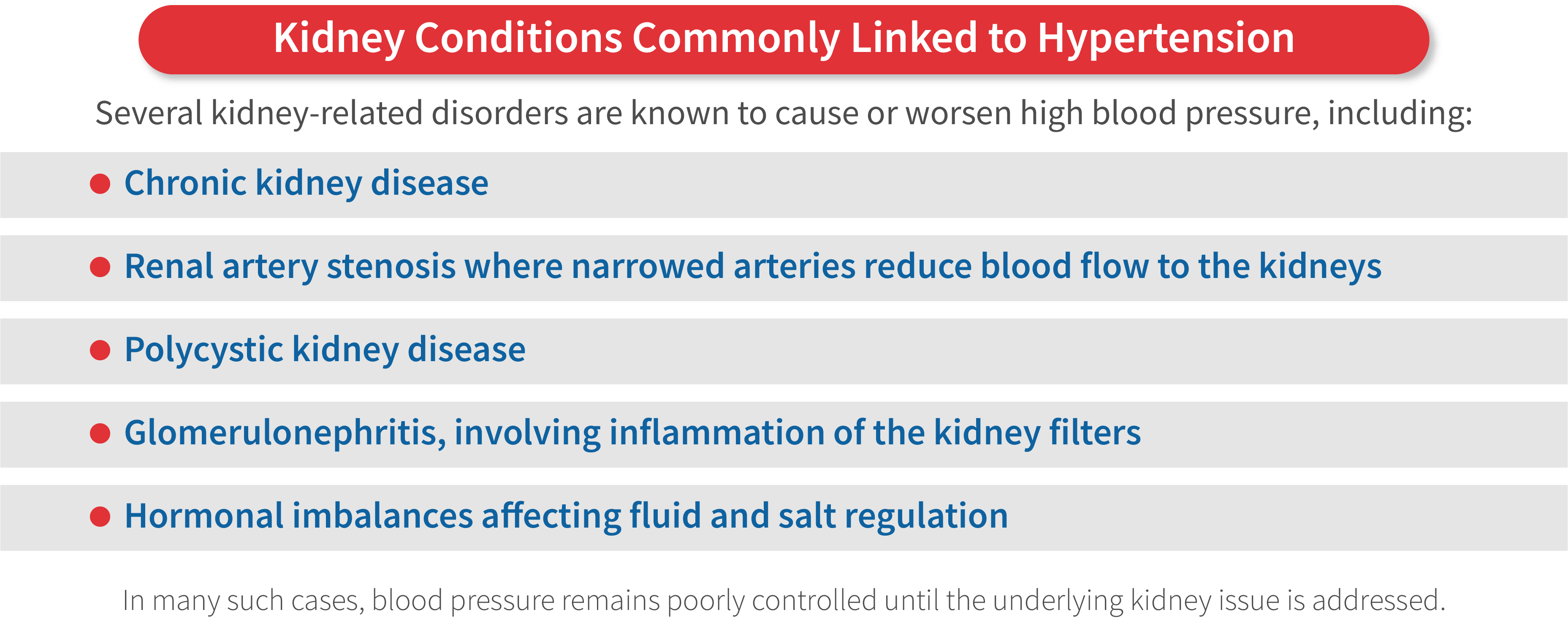
Kidney Conditions Commonly Linked to Hypertension
Why Do We Miss this Link
Kidney damage rarely causes pain in its early stages. Blood pressure can remain too high without obvious symptoms. This makes the condition easy to ignore until routine tests reveal abnormalities or some complications arise.
Signs that may suggest kidney involvement include:
-
Swelling of the feet or face
-
Foamy or reduced urine output
-
Persistent fatigue
-
Unexplained changes in blood pressure control
Regular screening is especially important for individuals with long-standing hypertension, diabetes, or a family history of kidney disease.
Protecting Both Blood Pressure and Kidney Health
The steps that protect the kidneys also support healthy blood pressure control. These include:
-
Exercising regularly
-
Following a balanced diet that supports blood sugar and cholesterol control
-
Limiting salt intake
-
Reducing alcohol consumption
-
Quitting smoking
-
Managing stress
-
Getting adequate, regular sleep
Early medical evaluation allows intervention before damage becomes irreversible. Maintaining regular follow-ups with a healthcare centre that offers comprehensive diagnostic and specialist support ensures that complications are identified early and managed effectively.
Care That Looks Beyond a Single Symptom
STAR Hospitals, Hyderabad, with branches at Banjara Hills and Nanakramguda, offers multidisciplinary care for conditions such as hypertension and kidney disease. With advanced diagnostics, experienced specialists, and 24/7 emergency and critical care services, STAR Hospitals focuses on treating not just isolated symptoms, but the systems they affect.
Because when it comes to blood pressure and kidney health, early attention not only protects two organs but also the long-term quality of life.