Breaking the Stiffness: Early Detection and Modern Management of Rheumatic Diseases
 Dr. S. Nayan Patel
Table of Contents
- Understanding Rheumatoid Arthritis
- Early-stage symptoms of Rheumatoid Arthritis
- Importance of Early Detection
- Rheumatoid Arthritis can be diagnosed by
- Other Rheumatic Diseases
As age catches up, we start slowing down a bit. We become aware of the faint but niggling aches and pains in our bones, joints and muscles. We ignore it as a part of ageing. But what often begins as mild discomfort can sometimes signal something deeper- a rheumatic disease. Do not get confused; "Rheumatic" is a general term for a group of inflammatory diseases affecting joints, muscles, and bones, whereas rheumatoid arthritis is a specific, chronic autoimmune disease within that group.
Understanding Rheumatoid Arthritis
Rheumatoid Arthritis (RA) is a long-term, progressive, inflammatory, autoimmune disorder that can damage the joints to cause disability. This chronic autoimmune and inflammatory condition affects millions of people worldwide, silently damaging joints, muscles and connective tissues over time. Rheumatoid arthritis occurs when the immune system mistakenly attacks the body’s joint linings, causing chronic inflammation. Over time, this inflammation can cause irreversible damage to cartilage and bones, leading to pain, deformities and other complications. RA is a progressive disease, but its devastating impact can be minimised with early diagnosis and prompt treatment.
Early-stage symptoms of Rheumatoid Arthritis
-
Persistent joint stiffness, especially in the morning
-
Pain and swelling in the joints of fingers and toes
-
Fatigue and occasional low-grade fever
Early identification of symptoms plays a key role in the timely intervention of RA.
Importance of Early Detection
Early diagnosis is critical in Rheumatoid Arthritis. If detected early, it can be treated to help the patient lead a normal life. It can:
-
Prevent permanent joint damage
-
Prevent the risk of other serious health problems
-
Prevent Cardiovascular issues
-
Prevent Osteoporosis
-
Prevent mental health issues like depression and anxiety
Rheumatoid Arthritis can be diagnosed by
-
Medical history: record of symptoms, lifestyle and family background.
-
Physical examination: physical examinations of joints, swelling and range of mobility.
-
Lab tests: for identification of markers and triggers.
-
Imaging technology: X-rays, MRIs, and ultrasounds for accurate evaluation.
MANAGEMENT OF RA
Effective management of Arthritis involves a multidisciplinary approach, combining medications, physical therapies and lifestyle modifications.
-
Medications: Medicines slow the progression of the disease by targeting the underlying inflammation that damages joints.
-
Biologic Therapies: These are advanced treatments which specifically target components of the immune system, such as tumour necrosis factor (TNF) or interleukin proteins, to halt joint inflammation. Biologics are often used when medicines alone are insufficient
-
Physical Therapy: Exercises improve joint flexibility, reduce stiffness, and strengthen muscles. Physical therapists plan exercises tailored to individual needs, helping patients maintain mobility while avoiding overexertion. Early on in the development of arthritis, stretching, low-impact aerobics, and resistance training are particularly effective. Exercise is also great for weight management. Regular activities like swimming, walking, or yoga help maintain joint mobility while improving muscle strength and reducing stiffness without straining the joints
-
Lifestyle Changes: For a balanced diet, incorporate anti-inflammatory foods such as leafy greens, fatty fish (rich in omega-3 fatty acids), berries and nuts to reduce inflammation naturally. A good option is to avoid processed foods and excessive sugars.
-
Regular Monitoring: It is a good practice to monitor inflammation markers (e.g., ESR, CRP) and undergo imaging scans (X-rays, MRIs). These are used to assess the effectiveness of RA treatment. By detecting changes early, adjustments can be made to avoid further damage.
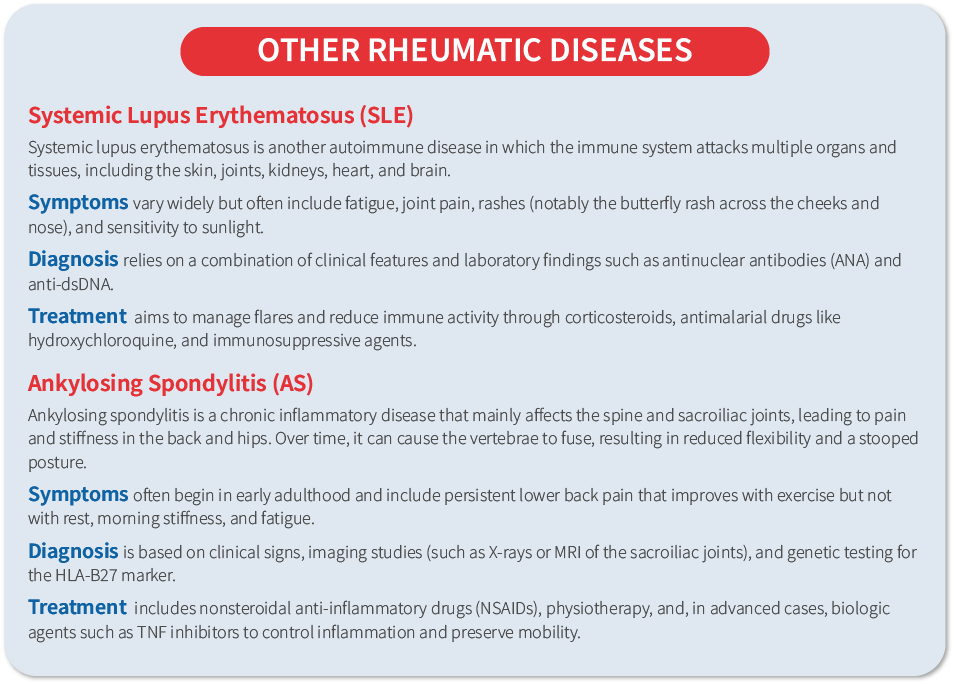
Other Rheumatic Diseases
In Short
Rheumatic diseases no longer control how one lives. Realistically, with early detection, proactive treatment and holistic care, patients can break free from stiffness and move toward a more active and fulfilling life. Support groups, awareness and timely intervention empower people suffering from RA to live as normal a life as possible
Star Hospitals in Hyderabad offer specialised care for Rheumatoid Arthritis (RA). Their focus is on accurate diagnosis and personalised treatment plans. Their expert medical professionals use advanced testing methodologies to identify autoimmune triggers and prescribe therapies tailored to each patient, including disease-modifying drugs, biologics, steroids, physiotherapy and lifestyle interventions to manage joint pain, fatigue and inflammation effectively. If you or your loved one is suffering from rheumatic diseases, book an appointment with STAR Hospitals.