Rheumatoid Arthritis: Why Early Diagnosis Can Prevent Permanent Joint Damage
 Dr. S. Nayan Patel
Table of Contents
- What Is Rheumatoid Arthritis?
- Understanding Arthritis
- What Is an Autoimmune Disease?
- What Causes Rheumatoid Arthritis?
- Early Signs and Symptoms of Rheumatoid Arthritis
- Why Early Diagnosis Matters
- How Is Rheumatoid Arthritis Diagnosed?
- How Is Rheumatoid Arthritis Treated?
- What Happens If Rheumatoid Arthritis Is Left Untreated?
- Lifestyle Changes That Can Help
Most of us have seen people struggling to walk comfortably, climb stairs, grip objects, or perform routine activities because of persistent joint pain and stiffness. While occasional joint discomfort can have many causes, ongoing pain, swelling, and stiffness may be early signs of Rheumatoid Arthritis (RA), a chronic autoimmune disease that can lead to permanent joint damage if left untreated.
The good news is that early diagnosis and timely treatment can significantly slow disease progression, reduce symptoms, and help people maintain an active and independent lifestyle.
What Is Rheumatoid Arthritis?
Rheumatoid Arthritis (RA) is a chronic autoimmune disease in which the body's immune system mistakenly attacks the lining of the joints (synovium), causing inflammation, pain, swelling, and stiffness. Over time, this persistent inflammation can damage cartilage, erode bones, and lead to permanent joint deformities if not treated early.
Unlike some other forms of arthritis, RA commonly affects the same joints on both sides of the body. It most frequently involves the fingers, hands, wrists, knees, ankles, feet, and toes. Although RA primarily affects the joints, it can also impact other organs such as the lungs, eyes, heart, and blood vessels.
Understanding Arthritis
Arthritis is a broad term that refers to conditions causing inflammation, pain, stiffness, and swelling in one or more joints. It can affect people of all ages and make everyday movements difficult.
Some of the most common types include:
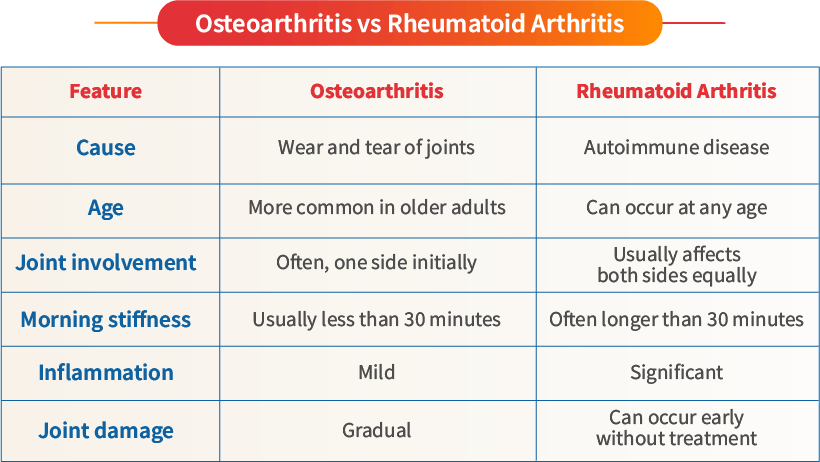
- Osteoarthritis (OA): A degenerative joint disease caused by wear and tear of cartilage over time.
- Rheumatoid Arthritis (RA): An autoimmune disease where the immune system attacks healthy joint tissues.
Understanding the difference between these conditions is important because their causes, progression, and treatment approaches vary significantly.
What Is an Autoimmune Disease?
An autoimmune disease occurs when the body's immune system mistakenly attacks its own healthy tissues instead of protecting the body from infections.
Normally, the immune system identifies harmful bacteria, viruses, and toxins and eliminates them. In autoimmune diseases, this defense system becomes overactive and targets healthy cells, causing chronic inflammation and tissue damage.
There are more than 100 autoimmune diseases, including:
- Rheumatoid Arthritis
- Lupus
- Psoriasis
- Multiple Sclerosis
- Type 1 Diabetes
- Inflammatory Bowel Disease
What Causes Rheumatoid Arthritis?
The exact cause of Rheumatoid Arthritis is still unknown. However, experts believe it develops due to a combination of genetic and environmental factors.
Possible risk factors include:
- Family history of autoimmune diseases
- Smoking
- Obesity
- Hormonal influences
- Environmental triggers
- Women are affected more frequently than men
- Most commonly develops between 30 and 60 years of age
Early Signs and Symptoms of Rheumatoid Arthritis
Recognizing symptoms early is crucial because permanent joint damage can begin within the first few months of uncontrolled inflammation.
Common symptoms include:
- Joint pain
- Swelling in the joints
- Morning stiffness lasting longer than 30 minutes
- Stiffness after periods of rest
- Warm, tender joints
- Pain affecting both sides of the body
- Difficulty gripping objects
- Fatigue
- Low-grade fever
- Loss of appetite
- General feeling of tiredness
Many people experience periods when symptoms worsen, known as flare-ups, followed by times when symptoms improve.
Why Early Diagnosis Matters
Early diagnosis is one of the most important factors in preventing permanent joint damage.
If Rheumatoid Arthritis is identified and treated in its early stages, treatment can:
- Prevent irreversible joint destruction
- Reduce inflammation
- Slow disease progression
- Preserve joint function
- Improve mobility
- Reduce disability
- Help patients maintain independence and quality of life
Seeking medical attention as soon as symptoms appear offers the best chance of controlling the disease effectively.
How Is Rheumatoid Arthritis Diagnosed?
A rheumatologist diagnoses Rheumatoid Arthritis by combining a patient's medical history, physical examination, laboratory investigations, and imaging studies.
Blood Tests
These may include:
- Erythrocyte Sedimentation Rate (ESR)
- C-Reactive Protein (CRP)
- Rheumatoid Factor (RF)
- Anti-Cyclic Citrullinated Peptide (Anti-CCP) Antibodies
Imaging Tests
Imaging helps identify joint inflammation and early bone damage.
Common investigations include:
- X-rays
- Ultrasound
- Magnetic Resonance Imaging (MRI)
How Is Rheumatoid Arthritis Treated?
Although there is currently no cure for Rheumatoid Arthritis, modern treatments can effectively control symptoms, reduce inflammation, and prevent joint damage.
Treatment may include:
- Disease-Modifying Anti-Rheumatic Drugs (DMARDs)
- Biologic therapies
- JAK inhibitors
- Non-Steroidal Anti-Inflammatory Drugs (NSAIDs)
- Corticosteroids
- Physiotherapy
- Occupational therapy
- Lifestyle modifications
In advanced cases where joints have been severely damaged, surgery may be recommended.
What Happens If Rheumatoid Arthritis Is Left Untreated?
Without appropriate treatment, Rheumatoid Arthritis may lead to:
- Permanent joint deformities
- Cartilage destruction
- Bone erosion
- Chronic pain
- Loss of mobility
- Disability
- Reduced quality of life
RA may also affect organs outside the joints, including the lungs, heart, eyes, and blood vessels, increasing the risk of serious health complications.
Lifestyle Changes That Can Help
Healthy lifestyle habits play an important role alongside medical treatment.
Patients are encouraged to:
- Follow a balanced, anti-inflammatory diet
- Stay physically active with low-impact exercises
- Maintain a healthy body weight
- Quit smoking
- Get adequate sleep
- Manage stress
- Take prescribed medications regularly
- Attend regular follow-up appointments
Osteoarthritis vs Rheumatoid Arthritis
Conclusion
Living with Rheumatoid Arthritis can be challenging, but it does not have to define your life. Recognizing the early warning signs and seeking timely medical care can make a significant difference in preventing permanent joint damage and preserving mobility.
Early diagnosis, the right treatment plan, regular follow-ups, medication adherence, and healthy lifestyle choices can help people with Rheumatoid Arthritis lead active and fulfilling lives.
STAR Hospitals is a leading multi-speciality healthcare institution in Hyderabad offering comprehensive care for Rheumatoid Arthritis through experienced rheumatologists, advanced diagnostic facilities, evidence-based treatments, and compassionate patient care. With state-of-the-art infrastructure and a multidisciplinary approach, STAR Hospitals is committed to helping patients manage Rheumatoid Arthritis effectively and improve their quality of life.
Frequently Asked Questions
Can Rheumatoid Arthritis be cured?
There is currently no cure for Rheumatoid Arthritis, but early diagnosis and appropriate treatment can effectively control symptoms and prevent joint damage.
What are the first signs of Rheumatoid Arthritis?
Early symptoms often include morning stiffness lasting more than 30 minutes, swelling, pain in small joints of the hands and feet, fatigue, and symmetrical joint involvement.
Is Rheumatoid Arthritis hereditary?
Genetics can increase the risk, but environmental and lifestyle factors also contribute to the development of the disease.
Can exercise help people with Rheumatoid Arthritis?
Yes. Regular low-impact exercises and physiotherapy help improve flexibility, strengthen muscles, and maintain joint function.
When should I consult a rheumatologist?
Seek medical attention if you experience persistent joint pain, swelling, stiffness, or fatigue lasting for several weeks, especially if symptoms affect both sides of the body.