Table of Contents
Those film scenes involving emergency rooms and the doctors’ dedicated efforts to save someone’s life always give us goosebumps. They are made to look dramatic and a little glamorous, even. But how exactly does this work in real life? Do you want to know?
When a medical crisis strikes, every second counts. Emergency Rooms (ERs) are the frontline of healthcare, where quick thinking and action, advanced technology, and expert care can mean the difference between life and death. The Emergency Room is more than just a department. It is a complex system built for rapid response towards an emergency, which often begins with panic, a fall, sharp pain, or a phone call in the middle of the night. In those critical moments, the Emergency Room becomes the lifeline, offering immediate medical attention to those who need it the most.
The Golden Hour
The golden hour is one of the most crucial points to remember in an emergency. It is the critical first 60 minutes following a traumatic injury or medical emergency that, when medically attended to, offers a higher rate of recovery/survival. The prompt medical treatment dramatically increases the chances of survival and recovery in emergencies like a severe accident, heart attack, or stroke. If you miss the golden hour, the chances of recovery and survival are significantly diminished.
What happens once a trauma patient reaches a hospital’s Emergency Room?
When a seriously injured patient arrives at the hospital emergency room, a “CODE TRAUMA” is quickly activated. This is an emergency alert activated by the emergency doctors that brings together a full team of specialists, such as trauma surgeons, anaesthetists, radiology team, and the blood bank to prepare and act immediately. The goal is to assess and treat life-threatening injuries as fast as possible to save the patient’s life and prevent further harm. This alert helps ensure everyone is ready and working together efficiently as soon as the patient arrives.
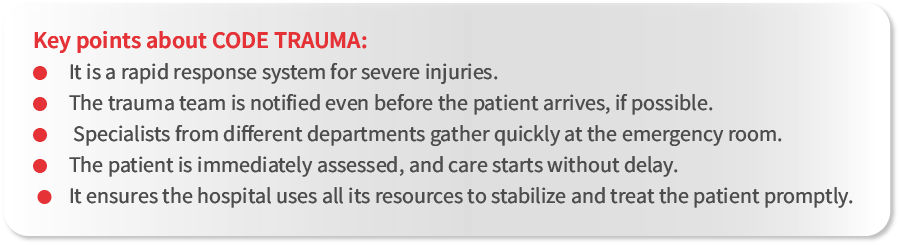
Certain basic principles govern the early management of trauma:
-
Treat the most dangerous problem first after systematic assessment — even if the full story is not known yet.
-
Lack of a complete, definitive diagnosis should never delay life-saving treatment.
-
Early Multidisciplinary team involvement for quick, definitive decision-making or emergency surgery if necessary.
The sequence of events in the Emergency Department looks somewhat like this:
-
Primary assessment and Resuscitation: A specialized team of doctors performs a quick, systematic, focused assessment to identify any life-threatening injuries. If such an injury/problem is identified, it is treated immediately without wasting any time. This involves systematically checking for any external signs of catastrophic bleeding, assessing the airway, spine, breathing, and blood circulation, which includes looking for potential major internal bleeding. Heart rate, blood pressure, oxygen saturation, and temperature are also monitored at the same time.
-
Secondary Survey: The secondary survey in trauma is a careful, head-to-toe examination done after doctors have made sure a patient’s most life-threatening problems are treated first. Its purpose is to find any hidden injuries that might not show up right away and gather extra details about how the injury happened. By checking the whole body, the team can spot injuries that need attention but aren’t immediately obvious, ensuring nothing important is missed as treatment continues.
-
Point-of-care tests and other investigations: In trauma care, Point-of-Care Tests (POCT) are quick medical tests done right at the site of patient care. These tests provide almost immediate results for important parameters blood gases, lactate, and glucose, helping doctors make fast and accurate decisions about a patient’s condition and treatment. This may also involve doing a quick ultrasound scan to look for any internal bleeding in the emergency department. Alongside POCT, other investigations like imaging (X-rays, CT scans), blood tests sent to labs can also be obtained quickly and are used to detect injuries and assess organ function comprehensively.
It takes a whole trauma team to resuscitate a critically ill trauma patient effectively. The approach is multidisciplinary, with the team consisting of an emergency physician, nurses, a blood bank team, a radiology team, surgeons, and the operating team, and others as required. Every person, from a doctor to the security and cleaning staff, has to fill in their specific role for the effective outcome of the patient.
Once the trauma assessment is completed by specialist teams, a rapid decision is made on whether the patient needs to be taken straight to the operating theatre for emergency surgery. This is often a critical step where doctors quickly weigh all findings and work together to ensure any life-threatening injuries are treated as urgently as possible, minimizing delays and improving the chances of survival for the patient.
By the end of the first emergency assessment and treatment after a traumatic injury, doctors and nurses will have made sure that.
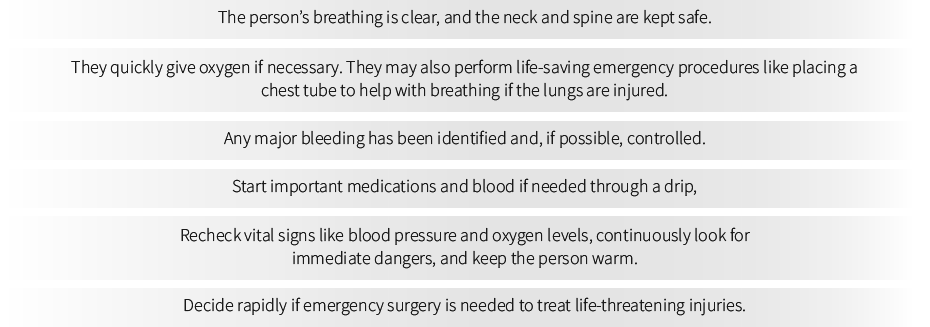
Acting fast in that first hour after a serious accident can make a huge difference, sometimes save a life or prevent major long-term problems—because the sooner the body’s important organs are protected, the better the chance for a full recovery.
In Short
No one plans a trip to the Emergency Room, but when the unexpected happens, it is reassuring to know there is a place designed to handle it all—from sudden injuries and severe pain to life-threatening emergencies. What is required is to stay calm and composed while acting smartly and rushing to the nearest emergency department. Having a prior idea about golden hour can save a lot of anxiety and tension. Understanding how it works, what to expect, and when to visit can help you make informed decisions during medical emergencies.
STAR Hospitals’ Emergency Department is built for speed, safety, and expertise. Staffed and led by experienced and qualified emergency doctors trained in top trauma centers across the world, the ER delivers 24/7 evidence-based interventions—from trauma stabilization to emergency trauma surgeries. With cutting-edge diagnostics and a multidisciplinary team on standby, every minute is optimized to protect the golden hour and save lives. If you are faced with an emergency, no need to think twice. STAR Hospitals is here to help you!