
How Ignoring Back Pain Today Can Cost Mobility Tomorrow
 Dr. Ajay Singh Thakur
Table of Contents
- What Causes Back Pain?
- Are Women More Prone to Backaches?
- Why is it important to treat backaches at the earliest?
- Untreated back pain often causes people
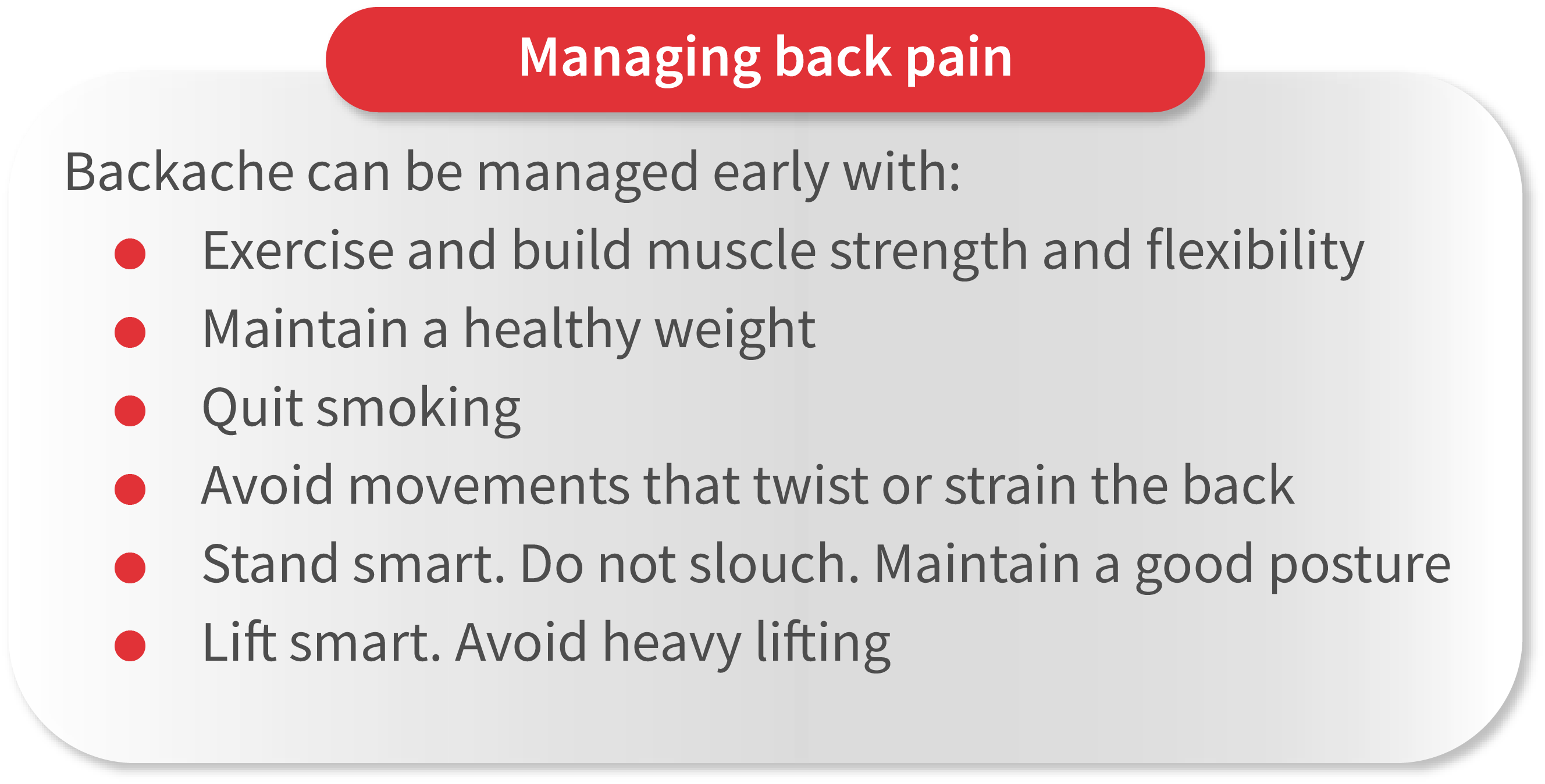
- Managing Back Pain
- Contact your healthcare professional for back pain
Back pain is like an uninvited houseguest: it shows up unannounced when you bend, twist, or even just sneeze, and then refuses to leave. But while a clingy friend is simply an inconvenience, persistent back pain is a warning. Ignoring that "uninvited guest" today can cost you your mobility tomorrow.
Let’s look at what your back might be trying to tell you.
What Causes Back Pain?
Many people initially experience back pain between the ages of 30 and 50. This is when spinal joints and discs start showing signs of wear and tear. In the later years, the prevalence of back aches rises significantly, especially around the age of 50–60. Up to 75% of adults over 60 report back pain.
Back pain can also occur earlier, due to injuries, poor posture, or lifestyle factors. Meaning even teenagers and young adults sometimes deal with it. Whatever your age is, it is a good practice to treat your spine and back with care and caution
Back pain often develops without a cause that shows up in a test or an imaging study. Conditions include:
-
Muscle or ligament strain due to repeated heavy lifting or a sudden, awkward movement
-
Bulging or ruptured disks
-
Arthritis, which can lead to a narrowing of the space around the spinal cord, a condition called spinal stenosis.
-
Osteoporosis, when the bones become porous and brittle
-
Ankylosing spondylitis, which primarily affects the spine and can lead to the fusion of vertebrae over time.
Backaches affect both men and women. But statistics show that women are more prone to backaches than men. Some reasons for women’s affinity to back aches:
-
Anatomical differences: Women generally have narrower spines, less back muscle mass, and smaller intervertebral discs. These increase susceptibility to strain and degeneration.
-
Hormonal influences: hormones can affect ligaments and joints, making the spine more vulnerable to pain.
-
Stages of life: pregnancy to childbirth to menopause are unique stresses affecting the spine and pelvic region.
-
Musculoskeletal pain trends: Studies show women are more likely to report longer-lasting pain, multiple pain sites with higher severity, compared to men
Why is it important to treat backaches at the earliest?
Anatomical differences: Women generally have narrower spines, less back muscle mass, and smaller intervertebral discs. These increase susceptibility to strain and degeneration.
Hormonal influences: hormones can affect ligaments and joints, making the spine more vulnerable to pain.
Stages of life: pregnancy to childbirth to menopause are unique stresses affecting the spine and pelvic region.
Musculoskeletal pain trends: Studies show women are more likely to report longer-lasting pain, multiple pain sites with higher severity, compared to men
Over time, temporary pain can turn into long-lasting (chronic) back pain, causing
-
Disc bulge or herniation
-
Early degeneration of spinal discs
-
Abnormal curvature or stiffness of the spine
These changes can start early and progress silently, and become harder to treat.
Untreated back pain often causes people to:
-
Avoid movement: Inactivity has its own issues, like weight gain and immobility.
-
Sit or walk incorrectly to avoid pain, leading to stiff muscles and joints, reduced flexibility and difficulty bending, lifting, or even walking.
-
Poor posture becomes a habit, leading to stress on the neck and shoulders and radiating down the back.
-
Chronic pain has a strong negative impact on daily life. It curtails productivity at work and activity, and affects sleep quality.
It can also harm moods and emotional effects by causing stress and anxiety due to fear of pain and low mood due to restrictions in movement.
Managing Back Pain
Contact your healthcare professional for back pain that:
-
Lasts longer than a few weeks
-
It is severe and does not improve with rest
-
Spreads down one or both legs, especially if it goes below the knee
-
Causes weakness, numbness, or tingling in one or both legs
-
It is paired with unexplained weight loss
-
Causes new bowel or bladder problems.
-
Is accompanied by a fever.
-
Follows a fall, blow to the back or other injury.
Final Thoughts
Brushing off back pain is a terrible idea because back pain is a warning, not a weakness. Addressing backaches early can protect mobility, prevent disability, and ensure a pain-free future. At STAR Hospitals, Hyderabad, our multidisciplinary spine experts utilise advanced diagnostics and minimally invasive treatments to restore your spinal health.
Don’t let the ache linger. Book a consultation with our specialists today and take the first step toward a pain-free life.