Table of Contents
- What is Chickenpox?
- What are the early symptoms of Chickenpox?
- How to identify the Chickenpox rash?
- How to treat Chickenpox at home?
- Making them comfortable at home
- What should they eat?
- When to call the doctor?
- Is Chickenpox Dangerous?
- A quick note on prevention
- Can a Child Get Chickenpox More Than Once?
Chickenpox is a common childhood infection that most parents will encounter at some point. While it is usually mild, it can cause discomfort and, in some cases, complications. Knowing what to expect and how to respond can make a significant difference in how smoothly your child recovers.
This guide answers the most common questions parents ask about chickenpox, based on guidance from experienced paediatric specialists at STAR Hospitals.
What is Chickenpox?
Chickenpox is basically a very contagious virus (Varicella-zoster). It travels through the air via coughs and sneezes or through direct contact with those pesky blisters. Most kids catch it before they turn 12, especially if they haven't been vaccinated yet.
What are the early symptoms of Chickenpox?
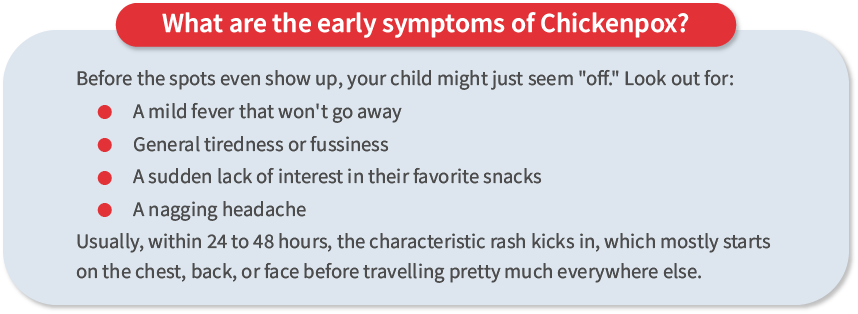
How to identify the Chickenpox rash?
The rash doesn't just appear all at once; it goes through several stages:
-
Red bumps: It starts as small, pinkish spots.
-
Blisters: Those spots turn into itchy, fluid-filled bubbles.
-
Scabs: Finally, they crust over and heal.
It’s totally normal to see all three stages happening at the same time on different parts of the body.
How to treat Chickenpox at home?
Your child is actually contagious before the spots appear (usually by a day or two) and stays contagious until all blisters have dried up and scabbed over. This usually takes a week at the least. Keep them home from school or daycare until that last scab forms to keep other kids safe.
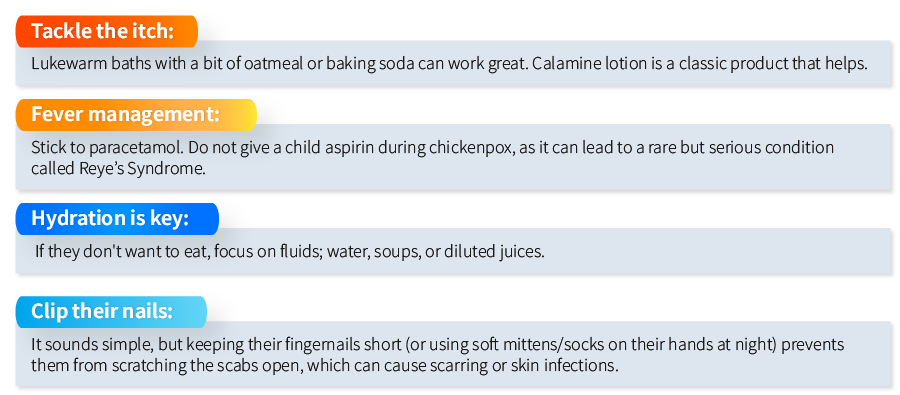
Making them comfortable at home:
Since there isn't a "cure" besides letting the virus run its course, your main job is managing the itch and the fever.
What should they eat?
If your child has spots inside their mouth, they won't want anything crunchy or salty. Stick to "soft" comfort foods like:
-
Curd or yoghurt (very cooling)
-
Dal and rice or khichdi
-
Coconut water
-
Fresh fruit (avoid citrus if they have mouth sores)
When to call the doctor?
Most kids have mild symptoms that cure fully, but keep an eye out for "red flags." Give your paediatrician a call if you notice:
-
A high fever that lasts longer than four days.
-
The rash was spreading to their eyes.
-
Any trouble breathing or a severe cough.
-
Extreme drowsiness or if they seem unusually confused.
Is Chickenpox Dangerous?
For healthy children, chickenpox is usually mild. However, complications can occur, including:
-
Skin infections
-
Inflammation of the brain (rare)
Infants, teenagers, and children with weak immune systems are at higher risk of complications.
A quick note on prevention
-
The Varicella vaccine is the best tool. It either prevents the infection entirely or, if they do catch it, makes the symptoms much, much milder.
-
If any classmates/ neighbours contact Chickenpox, take care to keep your child away from them until they are completely cured.
-
If any family members contract the virus, ensure that the child does not share the room/towels/plates with them, and encourage frequent handwashing.
Can a Child Get Chickenpox More Than Once?
It is uncommon, but possible. Most children develop lifelong immunity after one infection. However, the virus remains inactive in the body and can reactivate later in life as Shingles, especially in adults.
Bottom Line
It’s a tough week for both your child and you, but you will get through it. Focus on keeping them hydrated, comfortable, and as scratch-free as possible. If you are ever unsure about a symptom or want to check on their vaccination schedule, do not hesitate to reach out to a professional.
For personalized advice or paediatric care in Hyderabad, the team at STAR Hospitals is always ready to help.