Can You Recover from Pneumonia at Home? Here is What You Should Know
 Dr. Lakshmi Bhavana Chukkapalli
Table of Contents
- Who Can Safely Recover from Pneumonia at Home
- What Does Pneumonia Home Recovery Involve
- Benefits of Recovering at Home
- Risks and When to Be Careful During Home Recovery
- Follow-Up Matters
World Pneumonia Day has just passed, drawing attention to an infection that continues to trouble families across India, especially during the colder months and periods of high pollution. Pneumonia is a lung illness that can be fatal, yet many people with mild to moderate symptoms can recover safely at home when a doctor confirms that their condition is stable. Recent guidance from major health organisations echoes the same point: the severity varies widely, and decisions about home care depend on age, existing medical problems, symptom intensity, and how well the patient is managing day to day.
Let us tell you who may opt for a home recovery, the advantages and risks associated with it, and how to track progress.
Who Can Safely Recover from Pneumonia at Home
Doctors usually consider home care when the illness is mild and the patient is otherwise stable. Typically, the patients falling into any one of the following categories can go for home recovery:
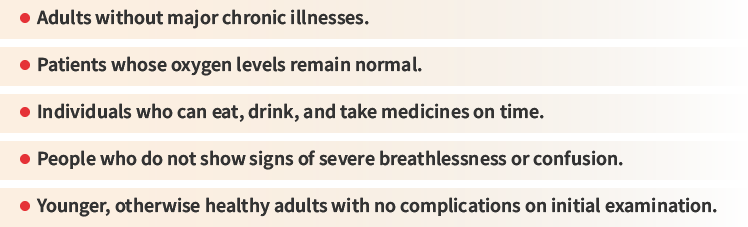
Some patients should be strongly advised against home recovery. This includes adults above 65 with existing heart or lung disease, children under five, and anyone with weak immunity. Patients experiencing very high fever, rapid breathing, low oxygen levels, or chest pain and whose condition does not improve within the first 48–72 hours of treatment are to discontinue home care and seek immediate medical attention.
What Does Pneumonia Home Recovery Involve
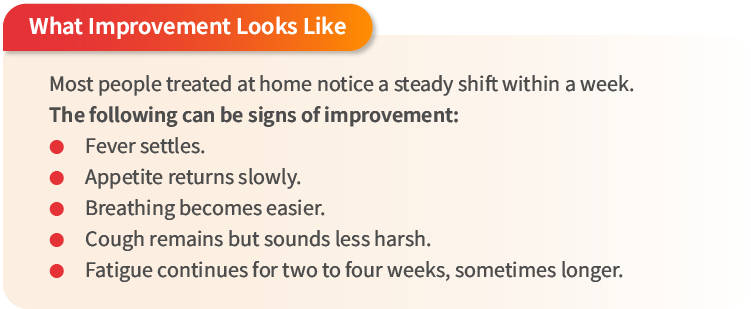
For those treated at home, the first few days usually set the tone. Fever often settles with antibiotics or antiviral medicine when these are prescribed correctly. Breathing may still feel heavy, and coughing can remain persistent, but these symptoms are expected as the lungs clear themselves.
For the success of home treatment, the following basic steps are unavoidable:
-
Complete the prescribed antibiotics/antivirals without skipping doses: You must finish the full course of medication even if you feel better midway. Stopping early can allow the infection to return or become harder to treat.
-
Rest for the first several days: The body uses considerable energy to fight pneumonia, so it is crucial to slow down normal routines. Sleep helps the lungs heal.
-
Drink enough fluids to avoid dehydration: Many people notice that their appetite dips for a while. Small, frequent meals and ample fluids make recovery steadier.
-
Use warm fluids to loosen mucus: Warm drinks, steamy showers, or a humidifier can ease congestion.
-
Keep the room smoke-free: Smoking or exposure to smoke slows healing and should be avoided entirely during recovery.
-
Light movement after the fever settles helps prevent stiffness: While improvement usually begins within a week, full strength takes longer. It is common to feel tired for several weeks, and some people take more than a month to regain normal stamina. Do small exercises and watch if the breathing has returned to normal.
Benefits of Recovering at Home
Staying at home can be comfortable and safe when the case is mild. It comes with several advantages, such as:
-
Lower exposure to hospital-acquired infections.
-
Greater rest because the environment is familiar.
-
Reduced stress, which helps recovery.
-
Ability to resume light routines gradually as strength returns.
Risks and When to Be Careful During Home Recovery
Even mild pneumonia needs supervision. When deciding to proceed with home care, the patient and caretakers need to assume responsibility and be on the lookout for any warning signs. The main concerns are:
-
Symptoms worsen quietly at home without early detection.
-
Rising fever that does not respond to medicine.
-
Breathing becomes heavier or faster.
-
Low energy persists beyond the usual period.
-
Chest pain, new confusion, or bluish lips or nails.
If symptoms do not improve within the expected window, doctors may check for complications or adjust treatment.
Follow-Up Matters
Most health organisations emphasise follow-up. Even after symptoms ease, a review ensures that the lungs have cleared well and that no hidden issues remain. People with repeated pneumonia, chronic lung disease, or a long smoking history may require additional tests.
Doctors usually recommend:
-
A review visit to ensure the infection has cleared.
-
Additional tests for people with repeated pneumonia or chronic lung disease.
-
A slow return to full physical activity.
In Short
Pneumonia remains treatable in most situations, and home recovery is safe when supervised properly. Understanding the course of the illness and knowing when to seek help makes a noticeable difference in outcomes. While in home recovery, keep in contact with a medical facility where your queries would be answered, and services provided in case of any emergencies.
STAR Hospitals has the best pulmonology department in Hyderabad and provides expert pneumonia care that you can trust. If symptoms escalate or you are uncertain about home recovery, STAR Hospitals offers comprehensive respiratory care with advanced diagnostic support and experienced pulmonologists. Timely assessment and supervised treatment can prevent complications and help you recover safely.
To know more or book an appointment, call 1800-102-7827.
Simple FAQs
1. How long does pneumonia recovery at home usually take?
Many people improve within a week, but tiredness and breathlessness can linger for three to four weeks.
2. Do I always need antibiotics for pneumonia?
Only bacterial pneumonia needs antibiotics. Viral pneumonia may need antivirals, depending on the cause. Your doctor will decide.
3. Can I go back to work quickly after pneumonia recovery?
Most people need at least a week of rest. Returning too early may prolong fatigue.
4. Should I use cough syrup if I have pneumonia?
Strong cough suppressants are usually discouraged unless prescribed, because coughing helps clear mucus.
5. When should I seek urgent care?
Seek immediate help for worsening breathlessness, chest pain, high fever that does not improve, confusion, or bluish lips or nails.