Table of Contents
- The Anatomy of a Heat Crisis
- The system fails when
- Understanding the Warning Signs
- How to Stay Hydrated and Safe?
- Check Your "Hydration Status"
- Who Needs Extra Care?
- When Advice Isn't Enough: Seeking Care
When the temperature climbs, you might only be "feeling the heat”, but your body is actively fighting to protect your vital organs. As a hospital, we see a significant spike in emergencies during peak summer months, most of which are entirely preventable.
Prevention does not come about by just drinking water when you're thirsty; it works when you understand the biological mechanics of heat and stay one step ahead of it.
The Anatomy of a Heat Crisis
Your body regulates its temperature through a process called Thermoregulation. Think of it like a high-performance radiator. When you get hot, your brain signals your sweat glands to release moisture. As that moisture evaporates, it carries heat away from your skin.
The system fails when:
-
You run out of "coolant" (fluids).
-
The environment is too humid for sweat to evaporate.
-
Your core temperature rises faster than your body can shed the heat.
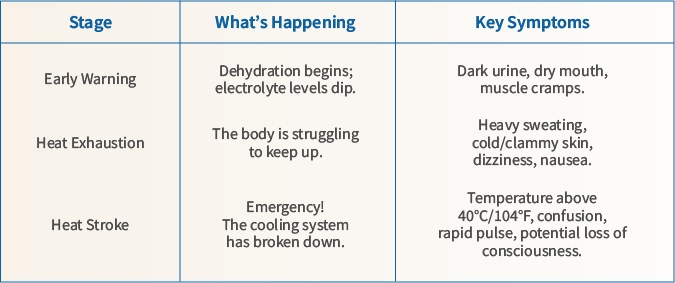
Understanding the Warning Signs:
Heat-related illnesses move in stages. Recognizing the transition from discomfort to danger is critical.
How to Stay Hydrated and Safe?
Here is a medically-backed approach to fluid intake to make sure your body’s heat regulation works perfectly:
-
The 20-Minute Rule: If you are outdoors or active, aim for a few sips of water every 20 minutes. Consistency is better for absorption than chugging large amounts at once.
-
Replenish the Salts: Sweat is not just water; it’s salt and minerals. If you have been sweating heavily, plain water can sometimes dilute your system too much. Use an ORS (Oral Rehydration Solution) or natural alternatives like coconut water to restore your electrolyte balance.
-
Avoid False Hydrators: Caffeine and high-sugar sodas can actually act as diuretics, causing you to lose more fluid than you gain. During a heatwave, stick to water, infused fruits, or buttermilk.
Check Your "Hydration Status"
Not sure if you are drinking enough? Use these two simple medical benchmarks:
-
The Urine Test: Your urine should stay pale and straw-colored. If it looks like apple juice or tea, you are already significantly dehydrated.
-
The Pinch Test: Pinch the skin on the back of your hand for a second. If it takes more than a moment to snap back to normal, your tissues are lacking fluid.
Who Needs Extra Care?
Certain individuals have a harder time regulating their internal thermostat. We advise extra monitoring for:
-
The Elderly: The thirst mechanism weakens with age.
-
Young Children: Their small body mass heats up 3–5 times faster than an adult's.
-
Chronic Patients: Those on blood pressure or heart medication may be more sensitive to fluid loss.
When Advice Isn't Enough: Seeking Care
If you or a loved one experiences a high fever, ceases to sweat despite the heat, or shows signs of confusion, this is an emergency. At STAR Hospitals, we are equipped with specialized cooling protocols and rehydration therapies to manage severe heat stress. Don't wait for symptoms to pass if they feel severe.
Stay informed. Stay hydrated. Stay cool.