HDL vs LDL Cholesterol: Understanding the Difference Between the 'Good' and the 'Bad'
 Dr. Srujana T
Table of Contents
- What exactly is Cholesterol?
- Why “Good” and “Bad” Cholesterol?
- What Should Your Target Cholesterol Numbers Look Like?
- What Triggers High or Low Cholesterol?
- Practical Ways to Improve Your Cholesterol
- When Should You Get Tested?
- Protect Your Heart with Expert Guidance
Most of us associate the word "cholesterol" with heart disease, but the truth is, your body actually needs it to survive. Cholesterol is a vital building block of the body. It helps construct healthy cell walls, produce essential hormones, synthesise vitamin D, and create bile acids that help you digest food.
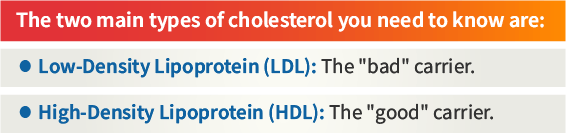
The trouble starts when there is too much of it circulating in your bloodstream, or when it is travelling in the wrong form. This is where we need to make the distinction between HDL (High-Density Lipoprotein) and LDL (Low-Density Lipoprotein). In everyday language, we call them "good" and "bad" cholesterol; these two proteins behave very differently inside your body.
Understanding this balance is one of the simplest ways to protect your heart and prevent serious emergencies like a heart attack or a stroke.
What exactly is Cholesterol?
Think of cholesterol as a waxy, fat-like substance present in every single cell of your body. Because it is fat-based, it cannot dissolve in your blood (which is mostly water). To travel through your bloodstream, it has to hitch a ride on proteins. These combined packages of fat and protein are called lipoproteins.
When you get a routine blood test, you will also see a term called triglycerides. This is yet another type of fat that stores unused calories from your diet. A high concentration of triglycerides in the blood, especially alongside high LDL or low HDL, means there is a significant increase in your risk of developing heart complications.
Why “Good” and “Bad” Cholesterol?
LDL’s primary job is to carry cholesterol from your liver to the various tissues and cells that need it. But when there is too much of it in the blood, it gets deposited in the walls of the arteries and over time hardens into tough structures called plaques. This narrowing and hardening of the blood vessels is a condition called atherosclerosis, which increases the chance of several problems, such as,
- Coronary artery disease (blocked heart arteries)
- Sudden heart attacks
- Brain strokes
- Peripheral artery disease (poor circulation in the limbs, especially the legs)
If LDL is the delivery truck that leaves clutter behind, HDL is more like the cleanup crew. HDL travels through your blood vessels, vacuums up excess cholesterol from your tissues and artery walls, and carries it back to the liver, where they are processed and flushed out of your body. Because of this natural cleansing action, doctors prefer to see higher HDL levels. While high HDL cannot completely undo the damage of a poor diet or a sedentary lifestyle, it goes a long way in keeping your blood vessels clear and protected.
What Should Your Target Cholesterol Numbers Look Like?
A standard blood test called a lipid profile is used to measure cholesterol levels. For most healthy adults, doctors generally look for the following baseline numbers:
Total Cholesterol: Under 200 mg/dL
LDL Cholesterol: Under 100 mg/dL (Note: If you have diabetes or existing heart issues, your doctor will likely want this much lower, below 70 mg/dL or even 50 mg/dL)
HDL Cholesterol: Over 40 mg/dL for men and over 50 mg/dL for women
Triglycerides: Under 150 mg/dL
A point to remember is that medical professionals do not look at these numbers in isolation. The evaluation of your reports has to be done alongside your age, family history, blood pressure, whether you smoke, and your blood sugar levels to understand your true cardiovascular risk.
What Triggers High or Low Cholesterol?
Your body’s cholesterol levels are influenced by a mix of lots of things, some of which are factors beyond your control. The most common causes include:
- Dietary Habits: Eating too many foods high in saturated fats and trans fats (like deep-fried snacks, vanaspati, and processed meats).
- Lack of Movement: A highly sedentary lifestyle such as a desk job with no exercise whatsoever.
- Weight Issues: Carrying excess weight, especially around the abdomen.
- Lifestyle Habits: Smoking and drinking alcohol in excess.
- Medical Conditions: Uncontrolled diabetes, underactive thyroid (hypothyroidism), or kidney disease.
- Genetics: Inherited conditions like familial hypercholesterolaemia, where the body naturally produces too much cholesterol regardless of diet.
- Aging: Cholesterol levels naturally tend to creep up as we grow older.
Because high cholesterol has absolutely no symptoms, even people who feel perfectly fit and active can have dangerously high levels of it and just not know about it. This makes regular testing crucial.
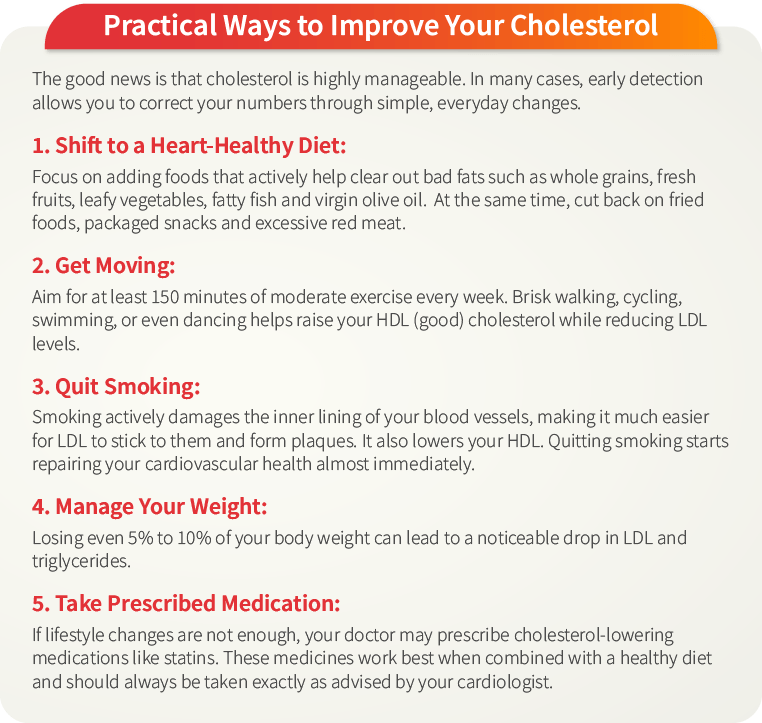
Practical Ways to Improve Your Cholesterol
When Should You Get Tested?
As a general rule, all adults should get a lipid profile done periodically. However, you should get tested more frequently if you have:
- A family history of heart attacks at an early age
- High blood pressure or diabetes
- A habit of smoking
- A body mass index (BMI) that falls into the overweight or obese category
Catching a cholesterol imbalance early gives you the upper hand, allowing you to make changes before any damage is done to your heart.
Protect Your Heart with Expert Guidance
High cholesterol is a silent condition, but its long-term impact on your blood vessels is very real. Managing the balance between HDL and LDL is one of the most effective ways to secure your future health. We at STAR Hospitals, Hyderabad, offer comprehensive preventive cardiology services that are focused on helping you stay ahead of heart disease. Whether you are looking for a routine heart screening or specialized cardiac care, STAR Hospitals offers world-class, multidisciplinary support tailored to your long-term wellness.