Table of Contents
- Causes/ Risk Factors Of Brain Tumours
- How To Prevent Brain Tumours
- Diagnosis Of Brain Tumours
- General Signs And Symptoms Caused By Brain Tumours
- Do Not Ignore These Symptoms
- Brain Tumour Surgery
- Post Surgery Procedures
- Rehabilitation And Long-Term Care
- Multidisciplinary Team Approach
We have all grown up hearing these common phrases from parents and teachers, and friends, too, sometimes—“Have you no brains?”. “Where have you left your brains?” “brainless.” All in good faith. But, God forbid, what if there is an aberration? Some weakness or some issue? Are these brain tumour warning signs?
Hearing the words "brain tumour" can be horrifying because it immediately alludes to or is associated with cancer. A tumour is a cluster or growth of abnormal cells that can occur in any part of the body, including the brain. A brain tumour is a serious concern. As a tumour grows inside the skull- a packed space with very little room for any other intervention- it can press on or damage important areas of the brain that control vital functions like breathing, movement, memory, or speech. Hence, sometimes even non-cancerous tumours turn fatal. Understanding all the aspects of the condition is the first step towards avoiding the fear and mitigating the ailment.
CAUSES/ RISK FACTORS OF BRAIN TUMOURS
The causes of brain tumours can be several, found differently in each individual. Here are some common factors:
- Family History: Brain tumours are not inherited. But generally, you are at a higher risk of developing tumours if there is a history of brain tumours in your family.
- External Factors: Radiation or harmful chemical substances from the environment put you at a higher risk of developing brain tumours. Those who undergo treatments for diseases like cancer, with strong chemical drugs or radiation, are also advised to stay cautious and get regular checkups.
- Mutations: Certain internal or external factors can cause genetic mutations- alterations in DNA composition- which lead to the development of brain tumours.
- Defective immune system: Brain tumours are also common in those who take immunosuppressant medicines or are immunocompromised due to certain treatments.
HOW TO PREVENT BRAIN TUMOURS
- Limit Exposure to Radiation: Avoid unnecessary head X-rays or CT scans. Use protective shields if imaging is needed. Reduce exposure to environmental and occupational radiation, like nuclear materials, frequent flying, etc
- Be Aware of Family History: If there is a history of brain tumours or genetic consider genetic counselling. Early screenings may help detect abnormalities
- Maintain a Healthy Lifestyle: Eat a balanced diet rich in antioxidants like fruits, vegetables, and nuts. Avoid processed meats and highly preserved foods. Maintain a healthy weight and regular physical activity.
- Use safety equipment if working in high-risk environments
- Use Electronic Devices Safely: Although no strong evidence links mobile phones to brain tumours, it is better to use hands-free devices or speaker mode to reduce long-term direct exposure and radiation
DIAGNOSIS OF BRAIN TUMOURS
Diagnosing a brain tumour involves multiple tests that help determine the location, size, and type of the tumour:
- MRI (Magnetic Resonance Imaging): The gold standard for brain imaging to detect tumours.
- CT Scan: Often the first imaging test done in an emergency.
- PET Scan: Helps assess tumour activity and monitor treatment response.
- Neurological Exam: Checks for coordination, reflexes, vision, and memory changes.
- Biopsy: A tissue sample taken surgically to confirm the diagnosis.
- Genetic Testing: Advanced tests to identify gene mutations and molecular markers for personalised treatment.
GENERAL SIGNS AND SYMPTOMS CAUSED BY BRAIN TUMOURS MAY INCLUDE:
Brain tumours that are not cancerous tend to cause symptoms to develop slowly. Symptoms can be subtle, hence you might not notice them initially. They can get worse over months or years.
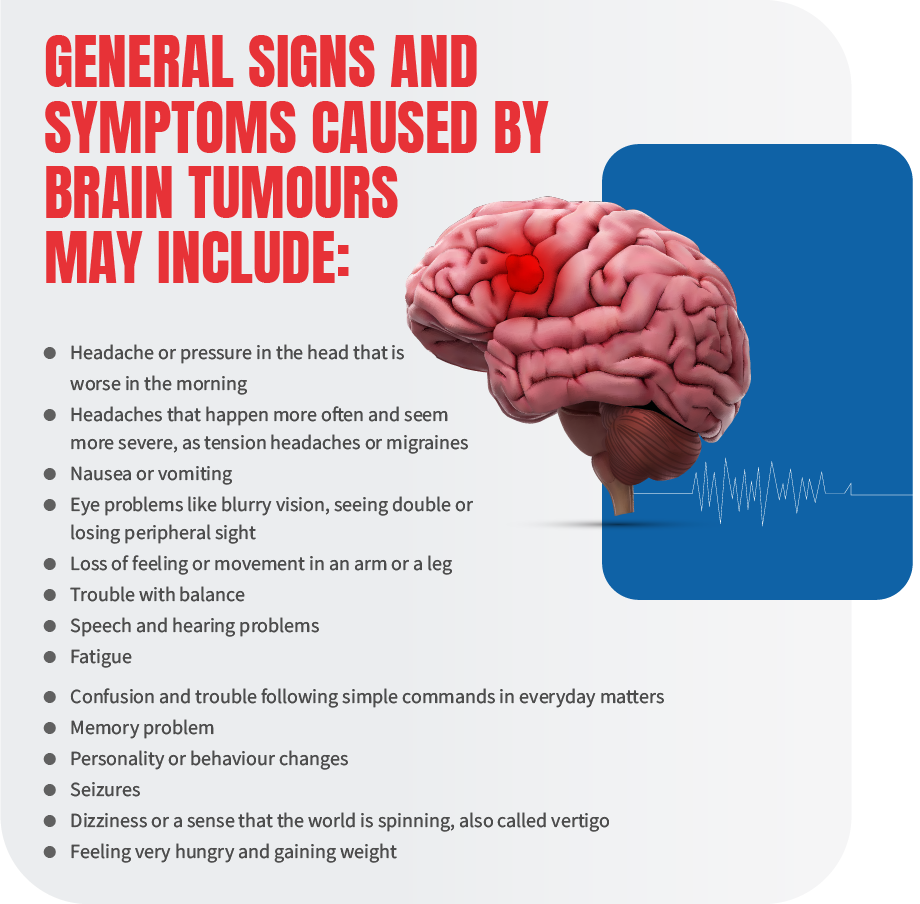
DO NOT IGNORE THESE SYMPTOMS OR ASSUME IT IS ACTING OR OVERREACTING. These symptoms are common to everyday minor ailments, but it is better to get screened early than regret later
TREATMENT OPTIONS FOR A BRAIN TUMOR INCLUDE:
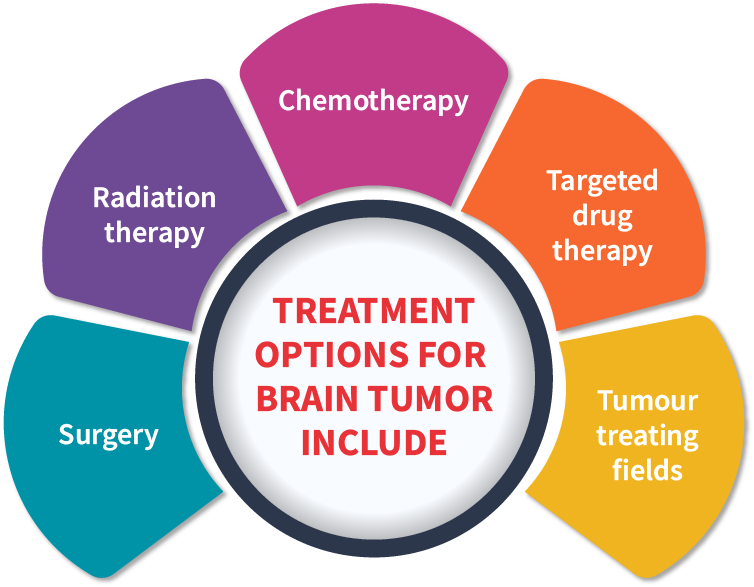
Clinical trials are research studies conducted on people to test how well new medical approaches—like drugs, treatments, or procedures—work and how safe they are. All trials follow strict rules to protect participants. It is a good option because a lot of care is provided while studying the disease
BRAIN TUMOUR SURGERY:
Brain Tumour Surgery is the most common treatment for brain tumours, and in a lot of cases, surgery is the only treatment needed. There are numerous surgical approaches to remove brain tumours, depending on their size and location, like:
Craniotomy: the temporary removal of a piece of skull to allow surgeons access to the brain
Awake brain tumour surgery: Patients are kept sedated and comfortable, but awake, during surgery, so doctors can ensure normal brain function is unaffected
Neuroendoscopy: Surgeons enter the brain through other parts of the body, like the nose, for easier access to certain regions and minimise scarring
MRI-guided laser ablation and laser interstitial thermal therapy (LITT): Radiologists and neurosurgeons use computer technology and intraoperative imaging to locate a tumour and precisely destroy the cancerous cells with lasers or heat.
Radiation Therapy and Chemotherapy are other treatment options which are offered by the neuro-oncologist based on the patient’s condition and diagnostic reports
POST SURGERY PROCEDURES:
Biopsy: Doctors take a small sample of brain tumour tissue to examine under a microscope for malignancy and treatment options
Neuroplastic surgery: This neurosurgical approach preserves and restores skull appearance and anatomy after invasive procedures.
Follow-up care and rehabilitation are very important
Stay informed with regular Check-Ups. Watch for persistent symptoms like headaches, seizures, vision changes, or memory issues. Do not ignore warning signs—early detection is key to better outcomes
REHABILITATION AND LONG-TERM CARE:
Post-treatment rehabilitation is critical for recovery. Depending on the tumour’s location and the type of surgery, patients may need:
- Physical therapy
- Speech and language therapy
- Occupational therapy
- Cognitive rehabilitation
- Hormonal therapy if the pituitary gland is affected
- Long-term imaging follow-ups to detect recurrence
MULTIDISCIPLINARY TEAM APPROACH
At centres like STAR Hospitals, a multidisciplinary team provides care:
- Neurosurgeon
- Neuro-oncologist
- Radiation oncologist
- Rehabilitation therapist
- Clinical psychologist/psychiatrist
- Nutritionist and nurse navigator
This collaborative model ensures holistic, effective, and compassionate treatment.
What to Remember
It is a good option to connect with a reputed hospital for regular check-ups. Star Hospitals has the Best Neurologists in Hyderabad. The multidisciplinary and patient-centred approach of the hospital benefits the patients in getting the best personalised care for any medical condition.
Complications in the brain are not to be taken lightly. If you are in doubt or want expert opinion, step up and seek only the best neuro-oncologist available in the city. Book an appointment with STAR Hospitals today and get expert opinion on your health and medical interventions if needed.