Sports Injuries in Children: Play Hard, Stay Safe
 Dr. Ajay Singh Thakur
Table of Contents
- Professional vs Hobby Sports- Why the Approach Matters
- Why Waiting for an Injury Is Too Late
- The 3 Golden Rules for Long-Term Safe Performance
- Common Sports Injuries in Children
- Stories That Inspire Comebacks
- Your Role as a Parent
- When Injuries Happen
- Beyond the Body — The Emotional Recovery
- Fuel for the Game — Nutrition That Protects
- How Star Hospitals Supports Young Athletes
Every parent dreams of seeing their child excel in sports. Wishes to see their child succeed in sports. Whether it's making the winning goal, crossing the finish line, or just loving the rush of the play, parents take pride in the success of their child. You root from the stands, heartbeat soaring, phone camera at the ready, hoping to record the winning moment.
But in the middle of all the excitement, there's a nagging thought at the back of one's head that every parent silently struggles with: What if they get injured?
This fear is not unfounded. Around the world, thousands of children suffer sports injuries every year. Some recover without a problem, while others tragically have to bear the effects for the rest of their lives. The reality is, injuries can be more than the end of matches; they can be the end of aspirations.
Professional vs Hobby Sports- Why the Approach Matters
Not all sports journeys are the same.
Some kids have the dream of wearing the India jersey. Some dream of holding Olympic medals. And some others want to compete in national leagues. For many, sports is not just a hobby — it’s a career path in the making.
But a lot of others play for the love of the game. They play weekend tournaments, after-school matches, and engage in neighbourhood friendly competitions for the sheer pleasure of it.
What's different? Intensity of training, recovery practices, and injury risk.
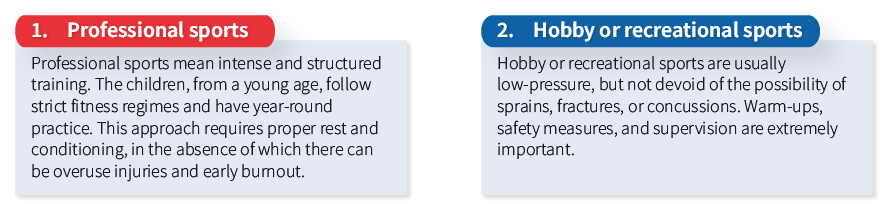
Whether your child is playing for fun or glory, safe, balanced training rules apply to both. Injury prevention isn't a choice; it's necessary.
Why Waiting for an Injury Is Too Late
Most parents are unaware that children's joints, bones, and muscles are not just small adult bodies — they are still accumulating assets for a lifetime of health. Children's bones are pliable, growth plates are weakened, and their coordination is scrambling to keep up with their energy.
If the injury is not well-treated in a child, it will impact growth plates, the developing areas of tissue at the end of the long bones, and result in long-term deformity or mobility problems.
Think about it this way:
You would not wait for your car to "break down" before taking it into service. So why wait for your child's body to "break down" before keeping it safe?
Prevention is quicker, cheaper, and much less painful, both emotionally and financially, than recovery.
The 3 Golden Rules for Long-Term Safe Performance
- Balanced Training
Skill, strength, and flexibility have to come as a package. Year-round focusing on a single sport is not as good for you as you would think. It overworks certain muscles and joints but leaves others sidelined. Seasonal switches of sport and cross-training are to be encouraged to give the body variety. - Proper Rest
Rest days are not laziness. On those days, the body recovers, gets stronger, and acquires endurance. Schedule breaks and off-seasons for young athletes, as they are essential to prevent burnout - Sport-Specific Conditioning
Every sport has its "hot spots" for injury. Those are ankles for footballers, shoulders for swimmers, and wrists for gymnasts. Training and conditioning exercises in those locations are effective in reducing the risk of injuries.
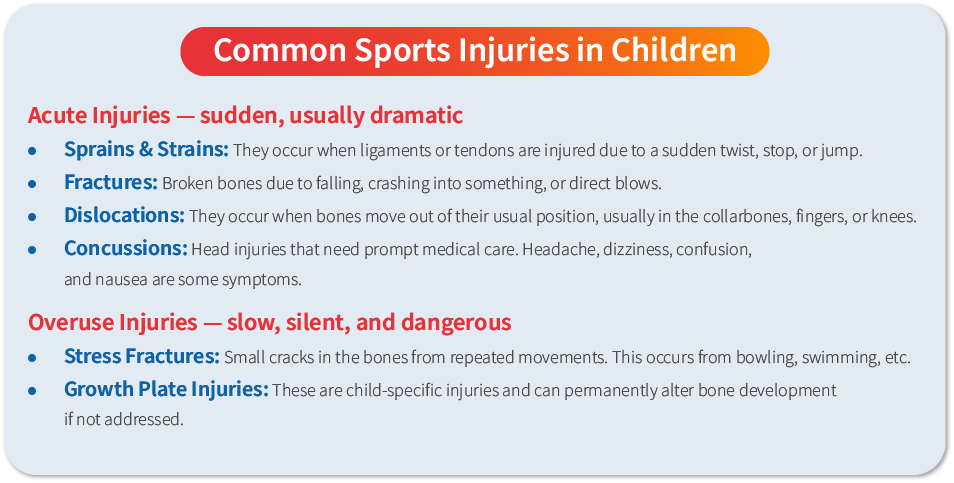
Common Sports Injuries in Children
Stories That Inspire Comebacks
When an injury happens, it may seem like the end of the road — but it does not have to be.
- Arjun Muralidharan was India's national swimmer who fractured his jaw in 2009 in an accident overseas. Months later, he again swam in the pool and won gold in the South Asian Games.
- Murali Sreeshankar, India's top long jumper, lost the Paris Olympics opportunity due to a knee injury. He didn't give up. He is training stronger, inspired by Kobe Bryant's Mamba Mentality.
- Nishika Agarwal, an Indian gymnast from Hyderabad and at the age of 16, was absent from the Asian Championships because of an ankle injury. Now she's back in training, with sights firmly placed on the 2028 Olympics.
Such sportsmen and women demonstrate that with professional medical treatment, psychological and emotional support, and willpower, setbacks can be converted into setups for an even stronger comeback.
Your Role as a Parent
You need to be more than a cheerleader as a parent. You're your child's first line of defence against injury.
Here’s how you can help:
- Watch for warning signs – Limping, swelling, repeated complaints of pain, or unusual fatigue should never be ignored.
- Make warm-ups and cool-downs a habit – Ensure that no session ever begins or ends without them.
- Insist on age-appropriate gear – fitting shoes or helmets improperly can do more harm than good.
- Encourage cross-training – Prevent repetitive strain by mixing activities.
- Demand safe environments – Check that grounds, courts, and equipment are well-maintained.
When Injuries Happen
For small injuries, recall RICE — Rest, Ice, Compression, Elevation.
For more than minor injuries, don't think you will "wait and see". Get expert assistance right away.
Gradual return to the field and timed. Ensure you have ticked these boxes before scheduling a return:
- They have medical clearance
- They’re pain-free and moving normally
- Their training intensity is built up gradually
Beyond the Body — The Emotional Recovery
Physical healing is only half the journey. Sports injuries can affect a child’s emotional well-being deeply.
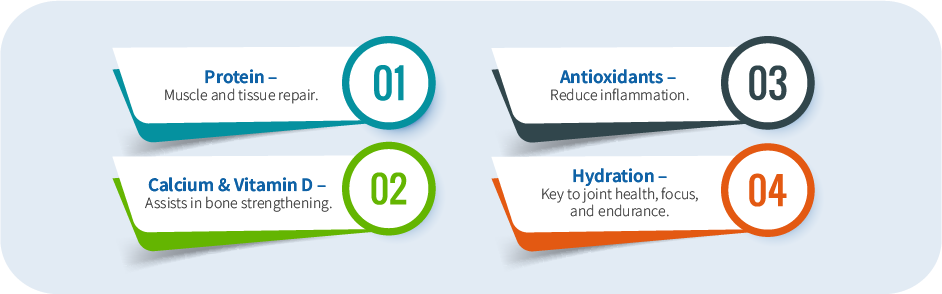
Fuel for the Game — Nutrition That Protects
A well-fuelled body is more resilient to injury and recovers faster:
This is where the parents get to make a difference. Make sure your child stays attached to their team despite the injury. Engage them in strategy sessions, support roles, and note small recovery milestones. Let them know that they are not defined by their present performance.
How Star Hospitals Supports Young Athletes
At STAR, we want every young athlete to be able to play fear-free. We don't only treat injuries; we are here to prevent them.
We have a multidisciplinary sports medicine team comprising:
- Sports Medicine Specialists who properly diagnose and provide customised recovery strategies
- Physiotherapists who assist in rebuilding strength, mobility, and confidence
- Nutritionists who provide young athletes with the fuel necessary
- Counsellors who assist in helping children deal with the mental and emotional aspects of injury
Whether it is a weekend game sprain or rehab following surgery, our intention is the same. Keep your child playing- stronger, safer, and longer. Because ultimately, the greatest win isn't a trophy or a medal. It's having your child be healthy enough to pursue their dreams for years to come.